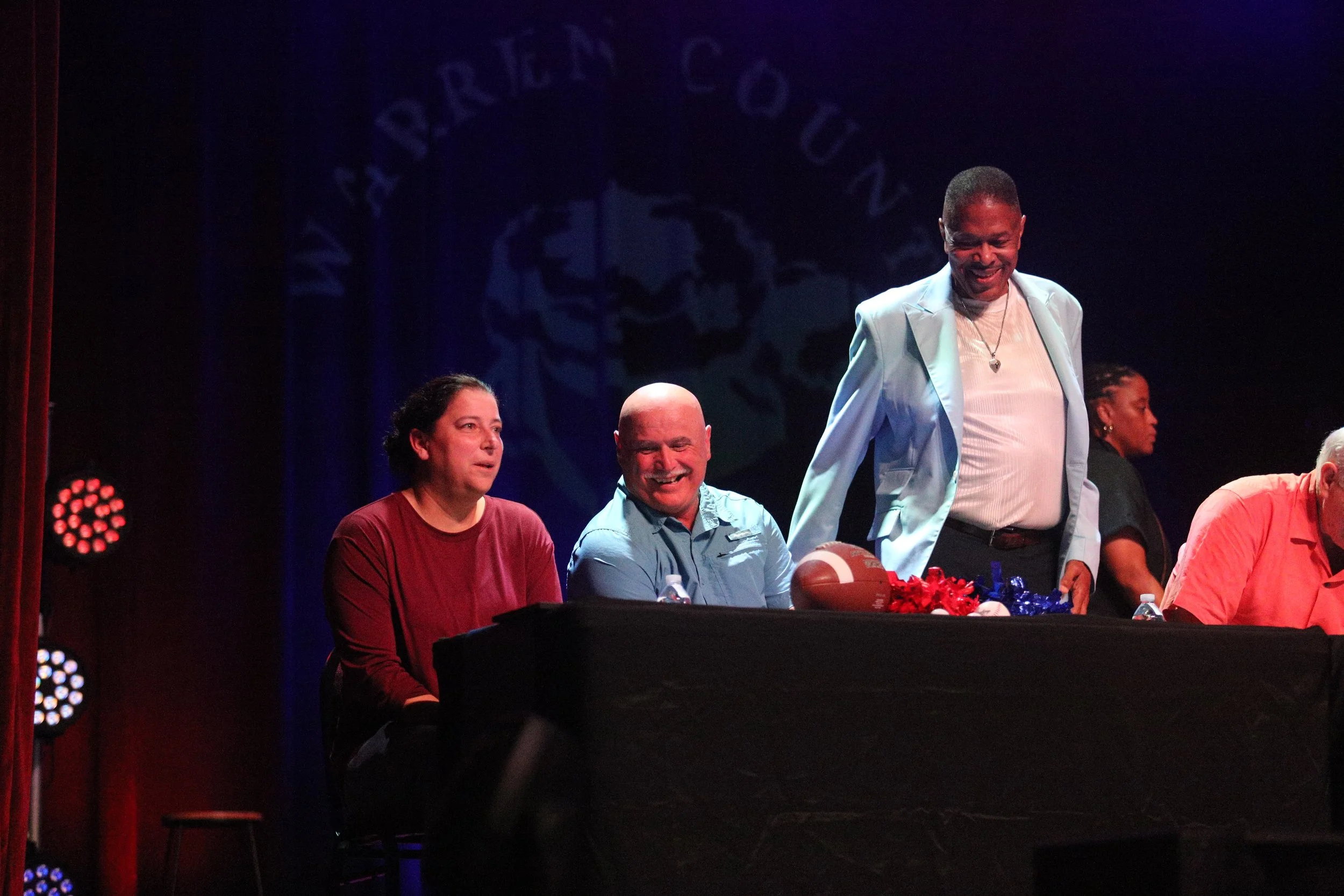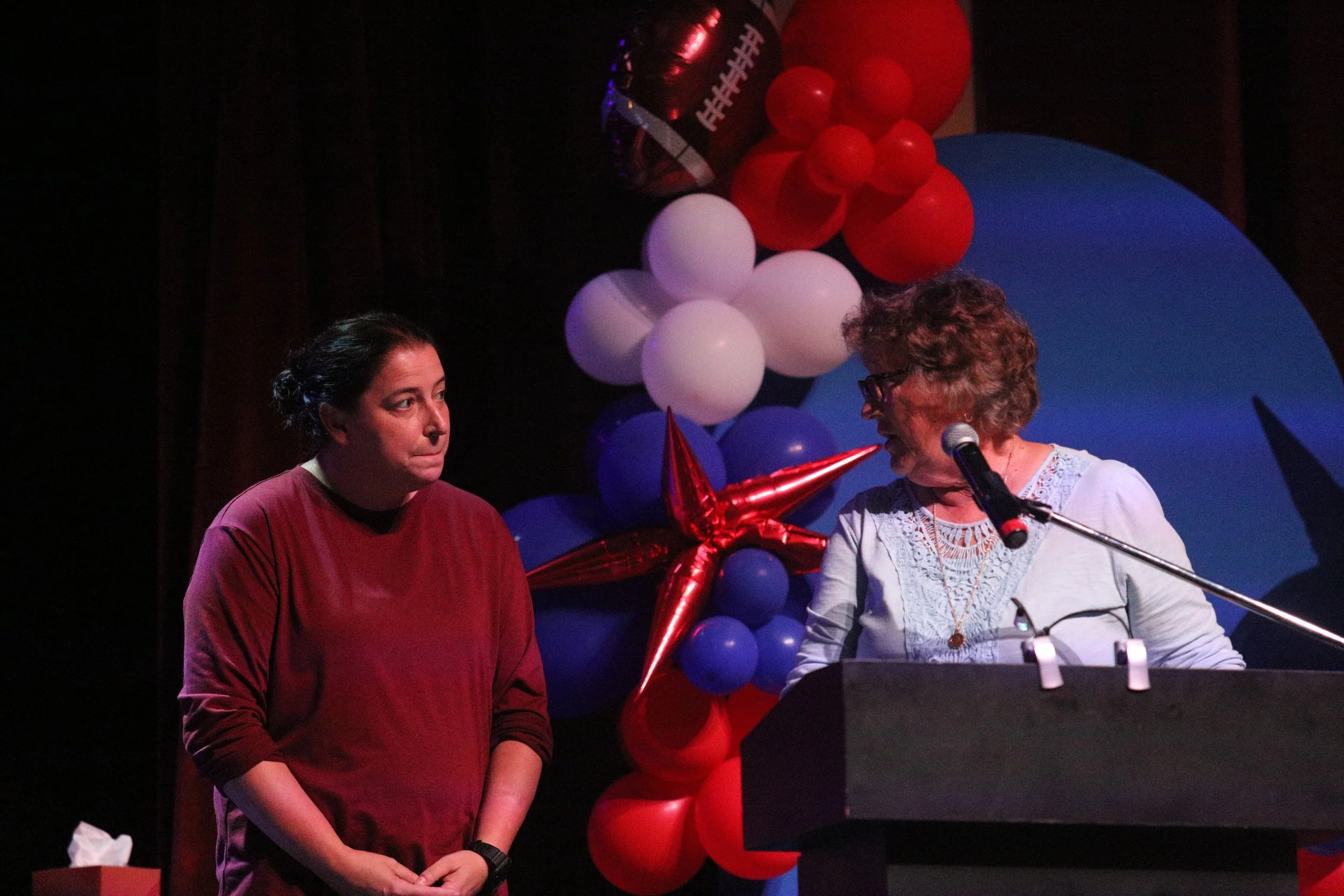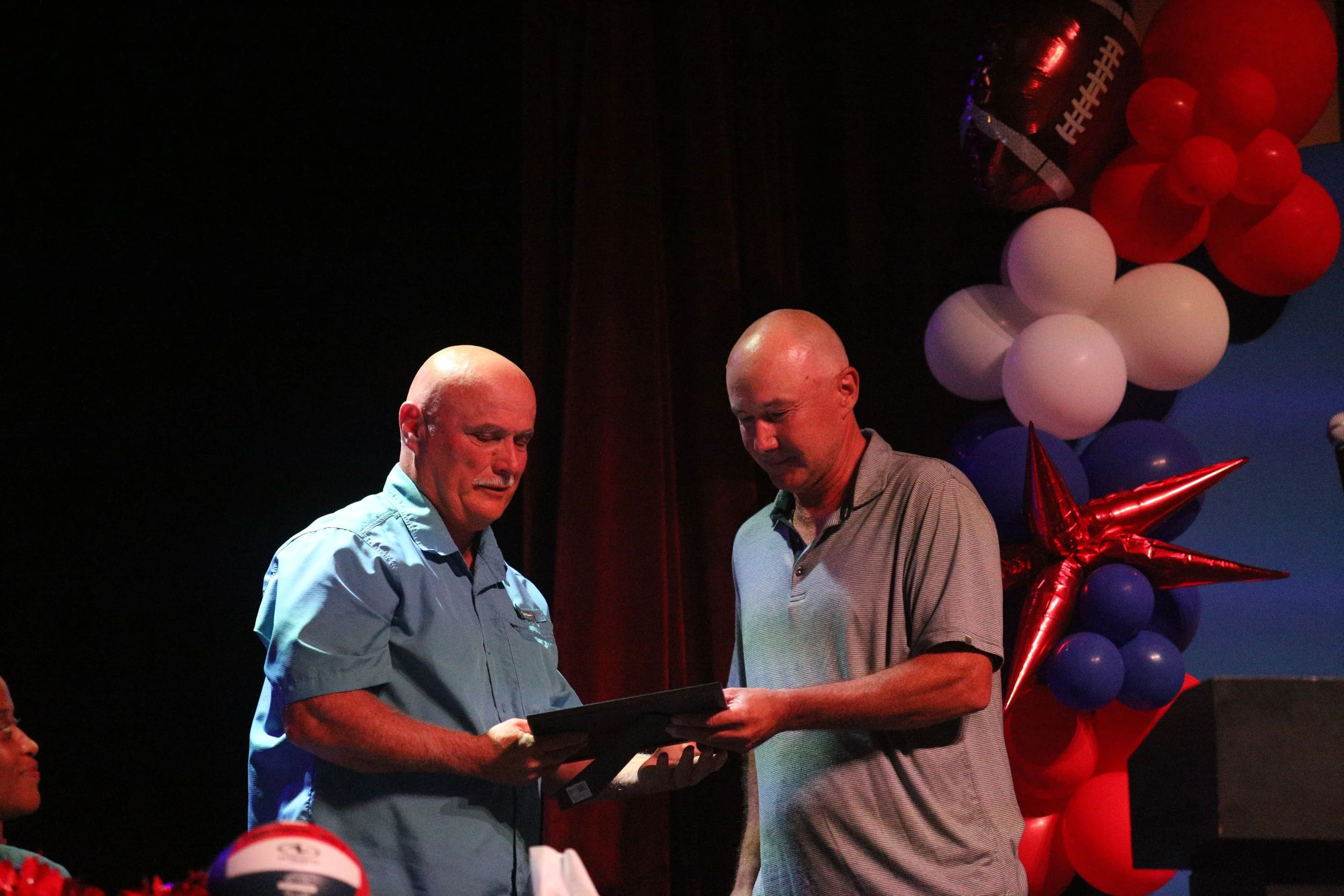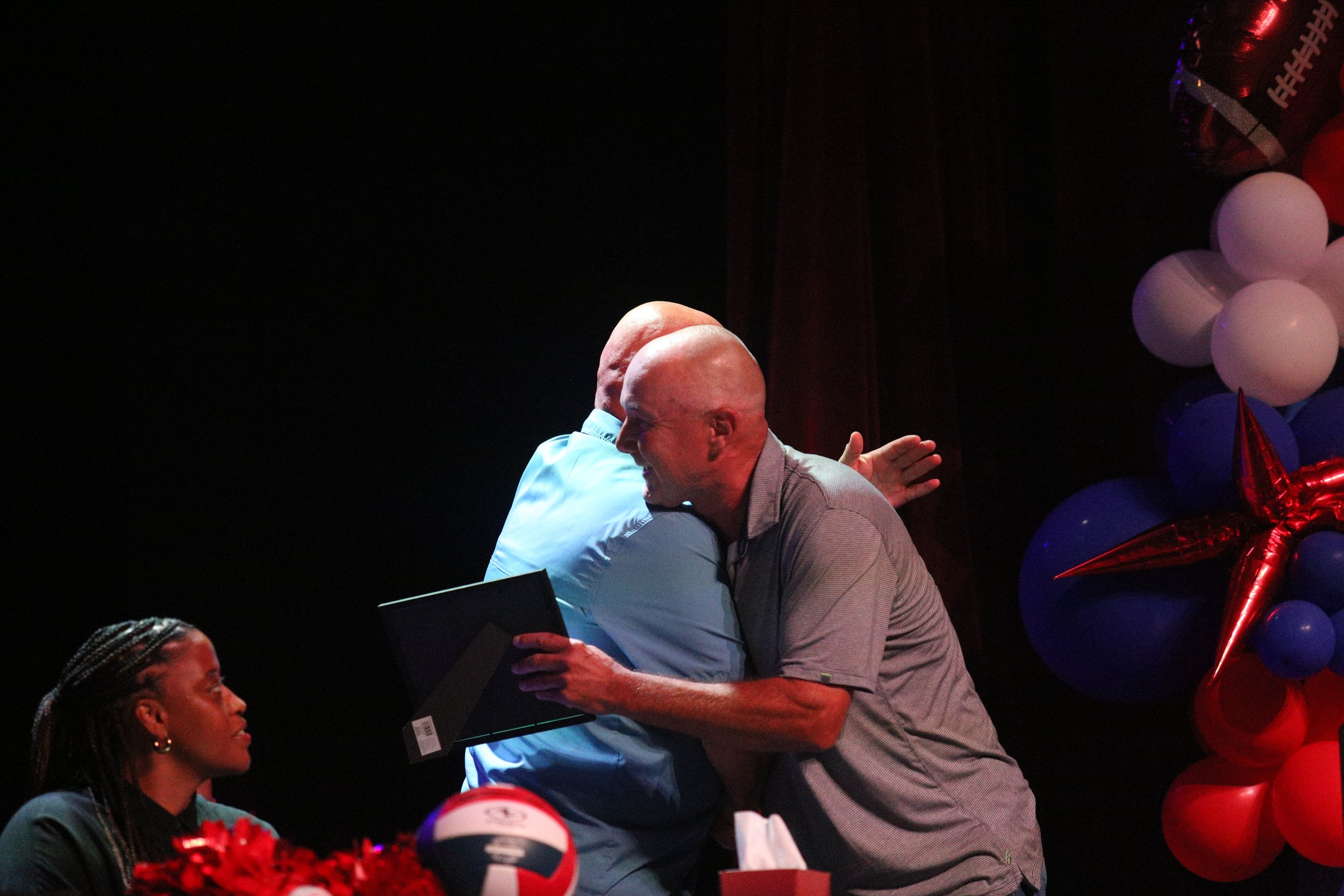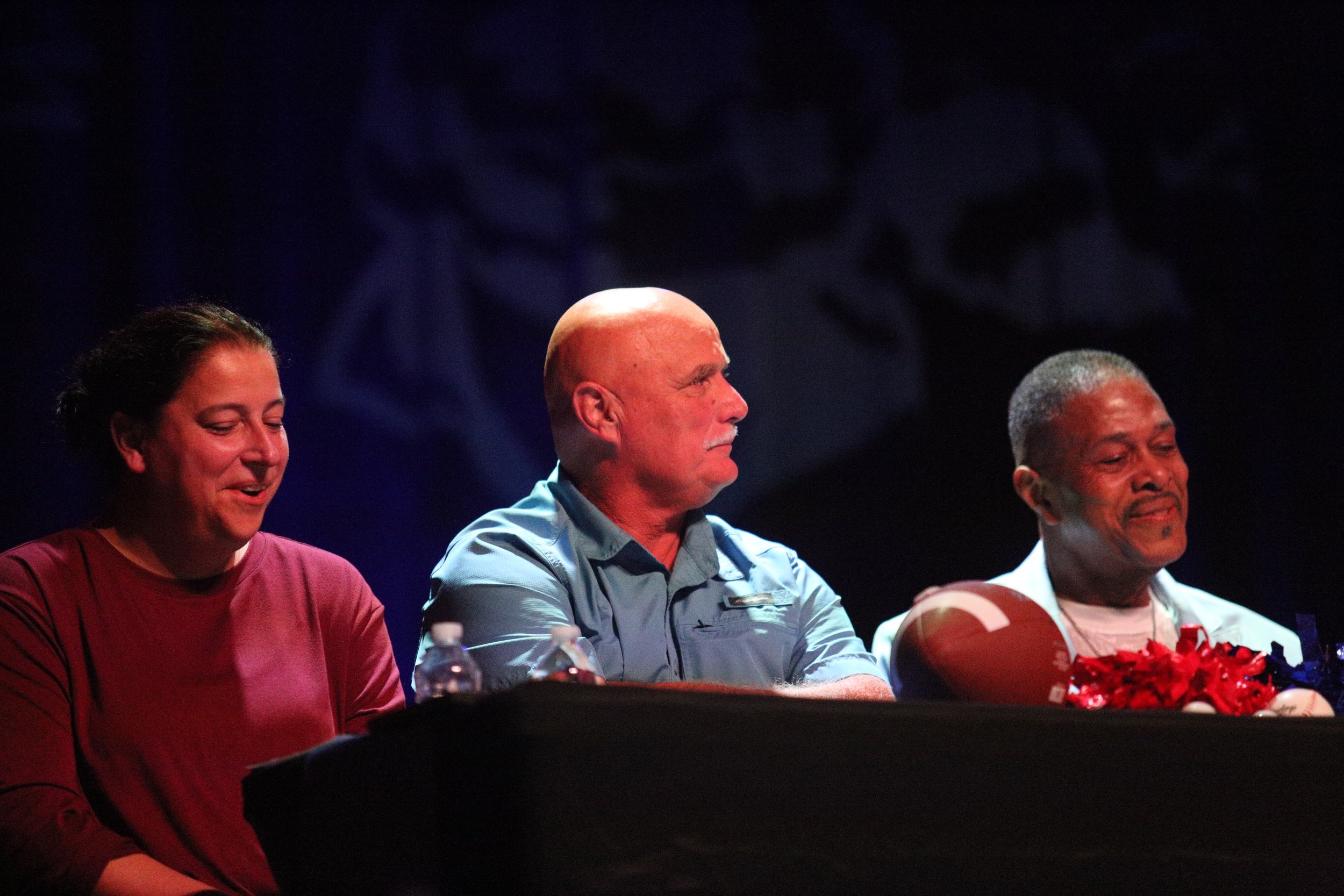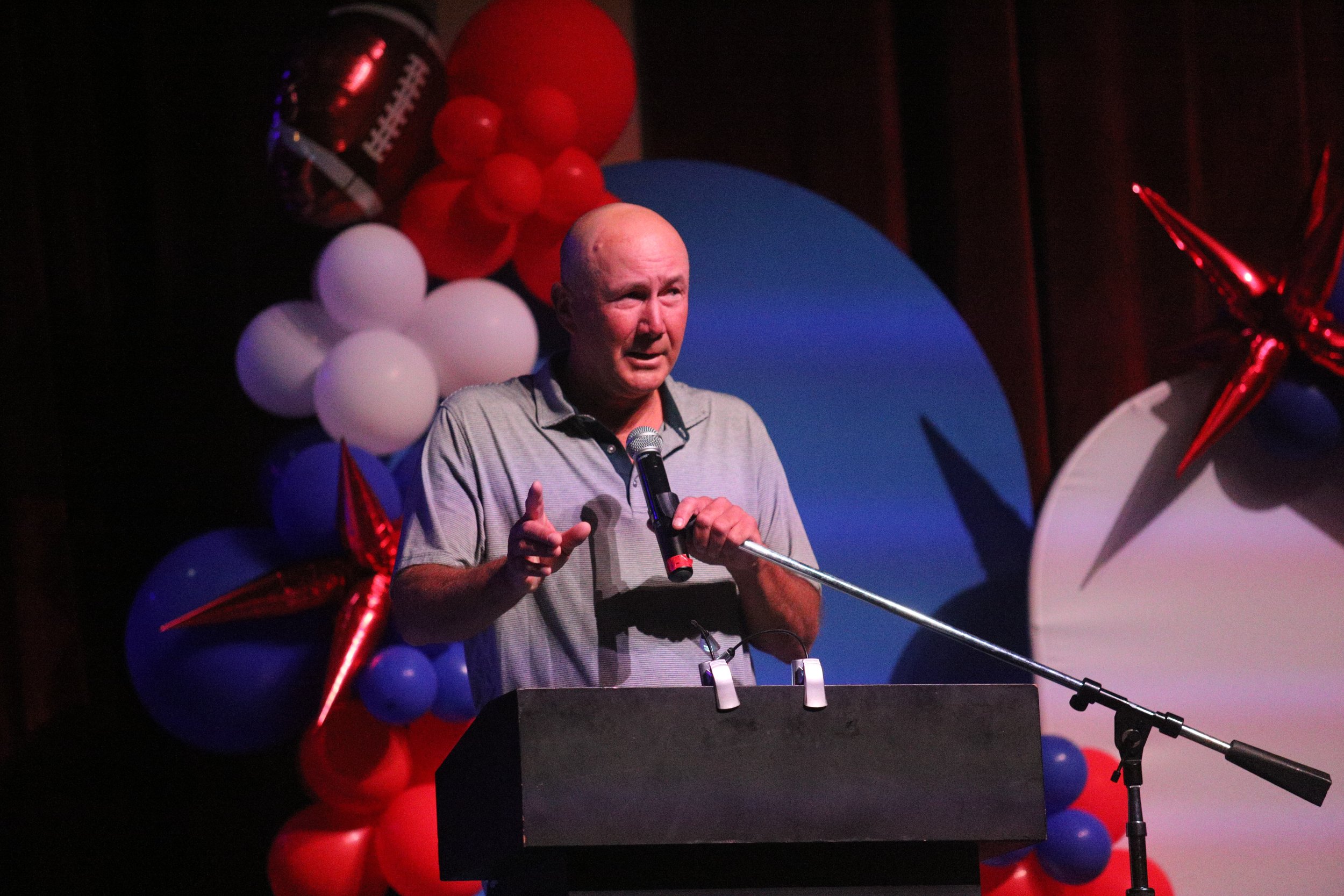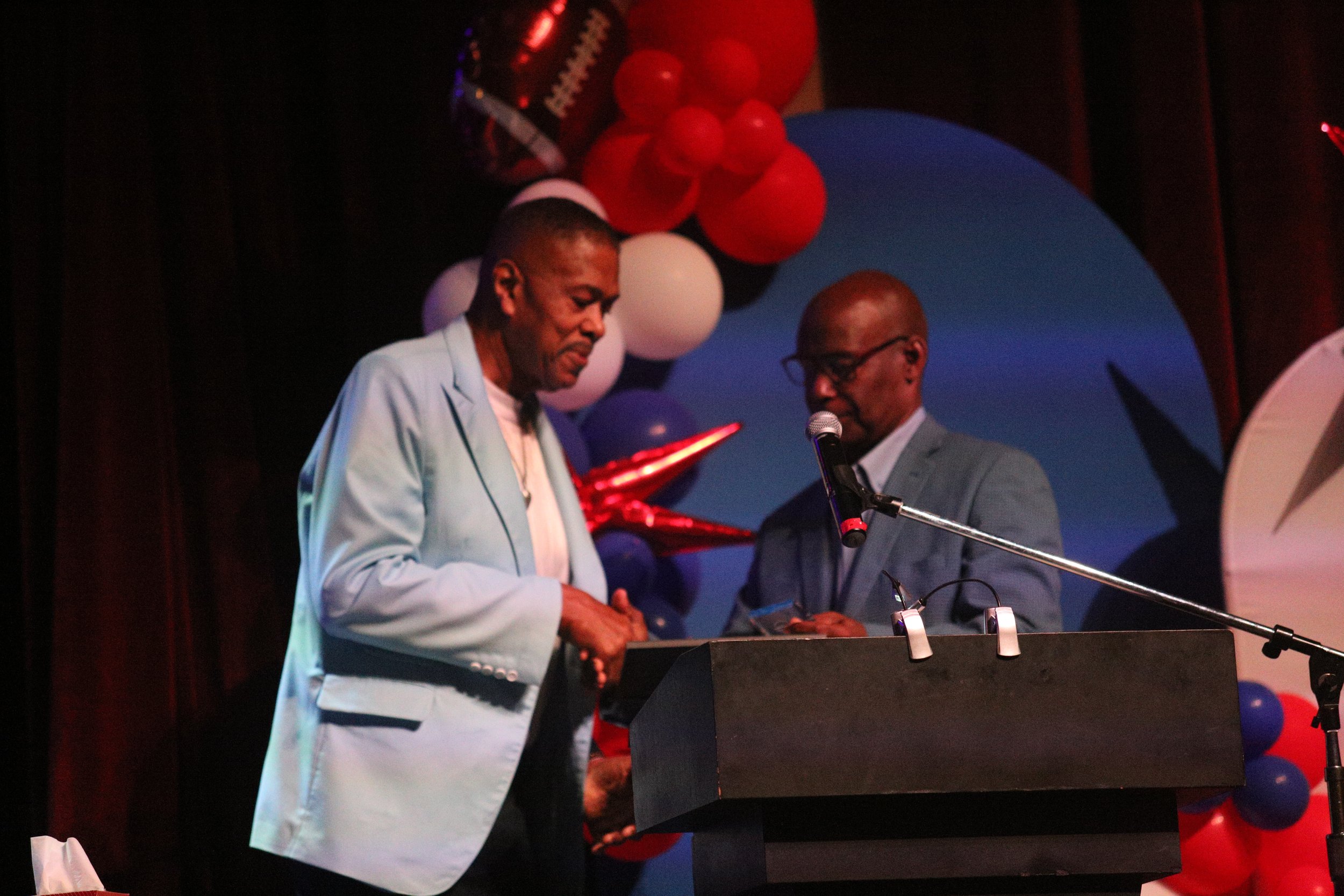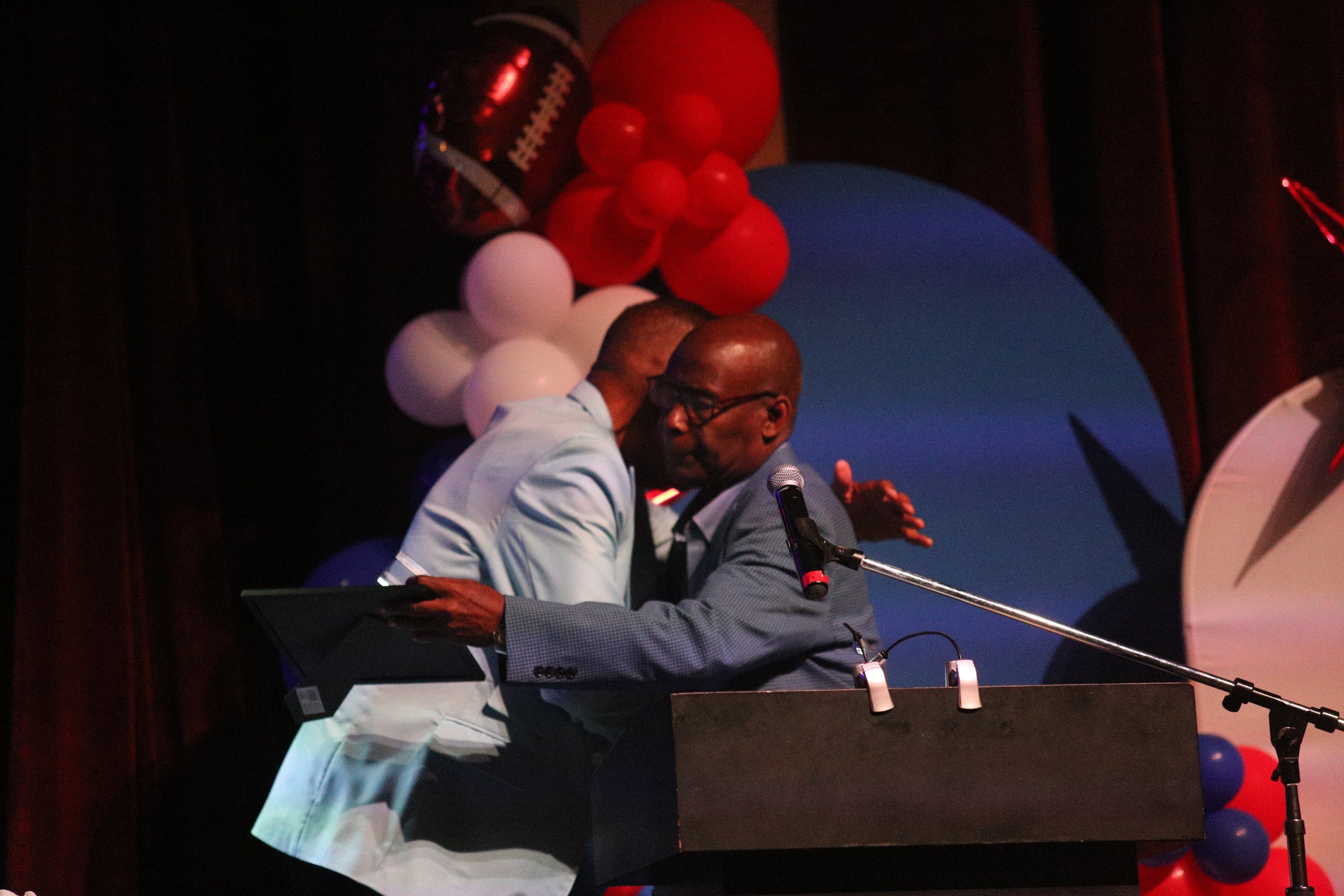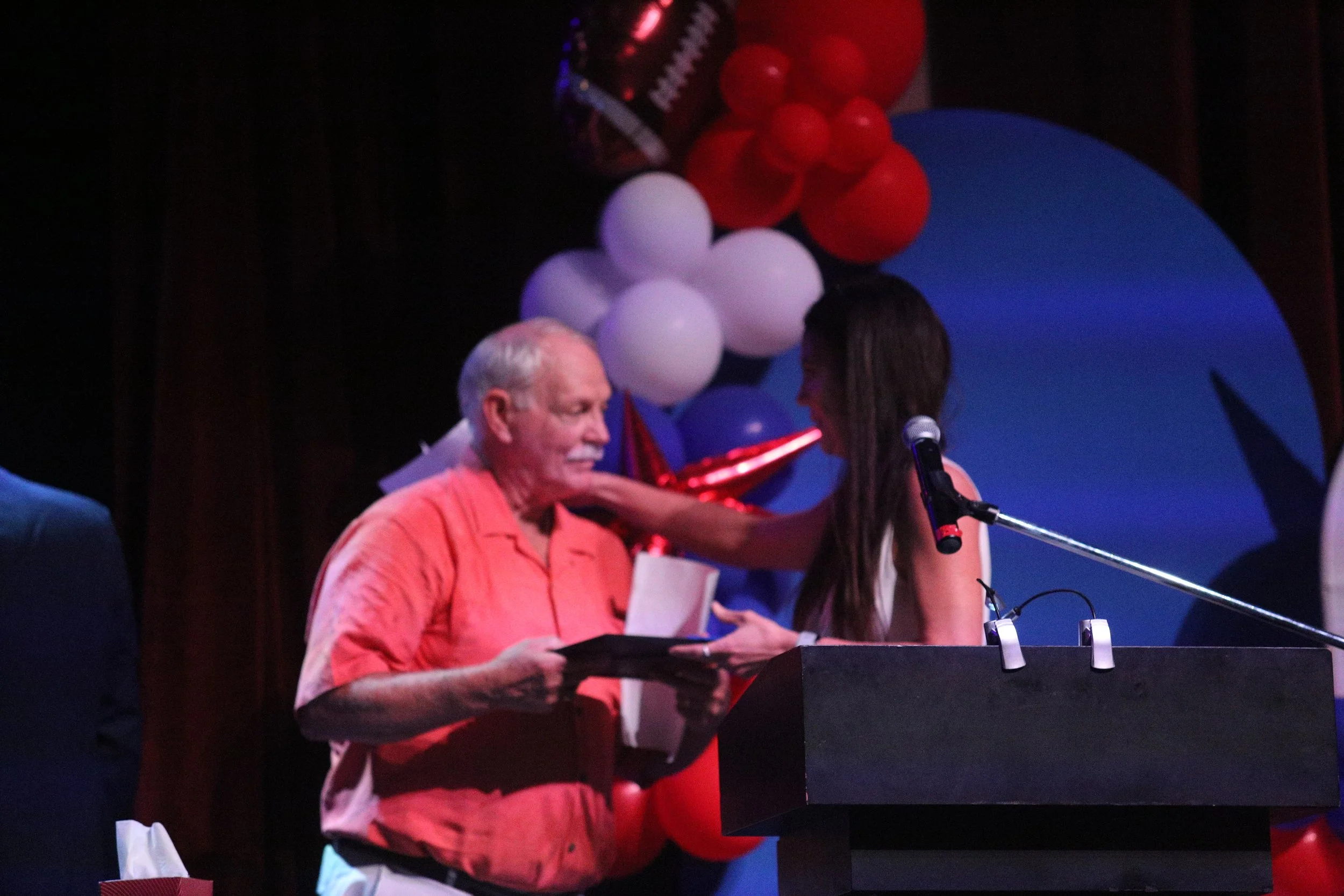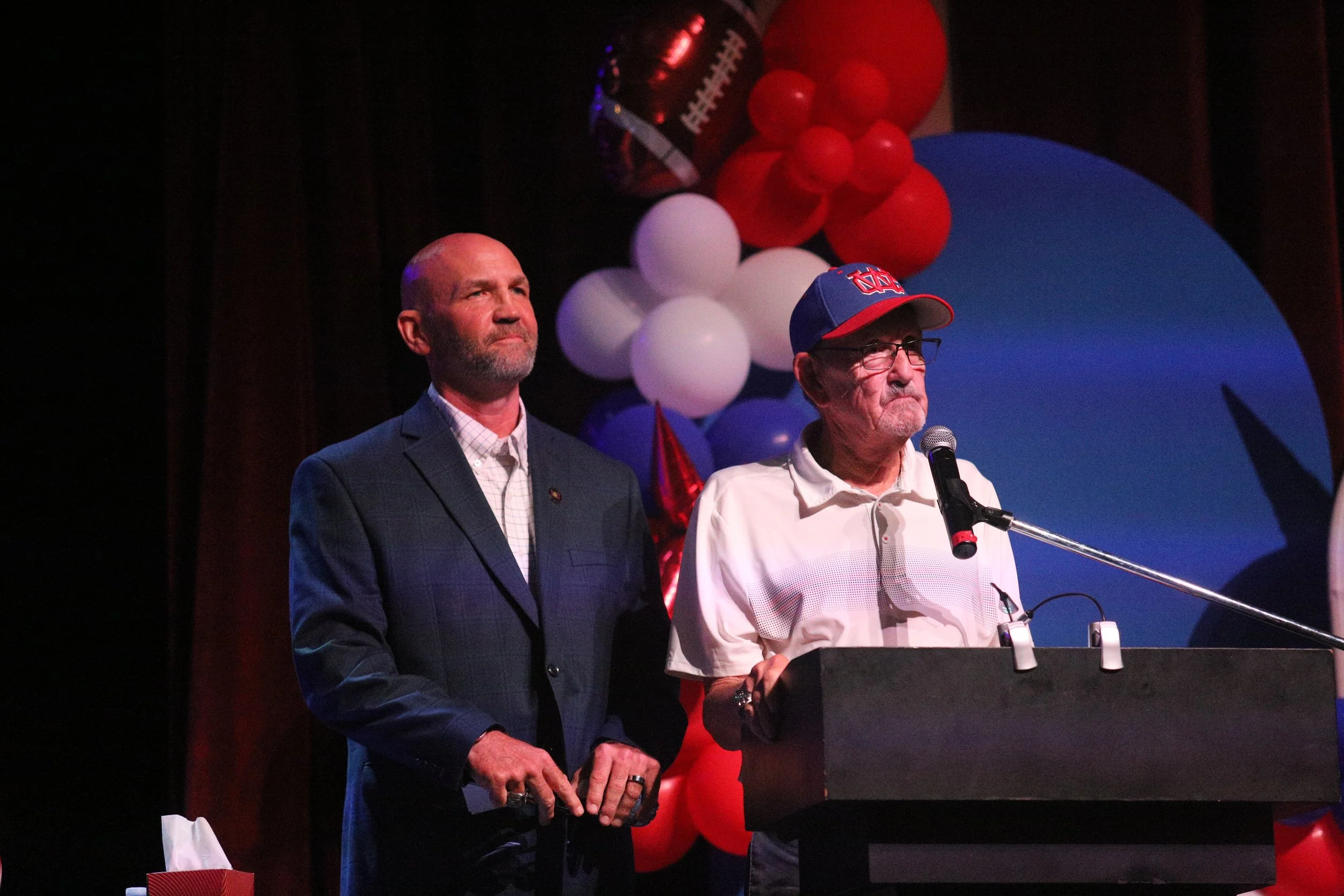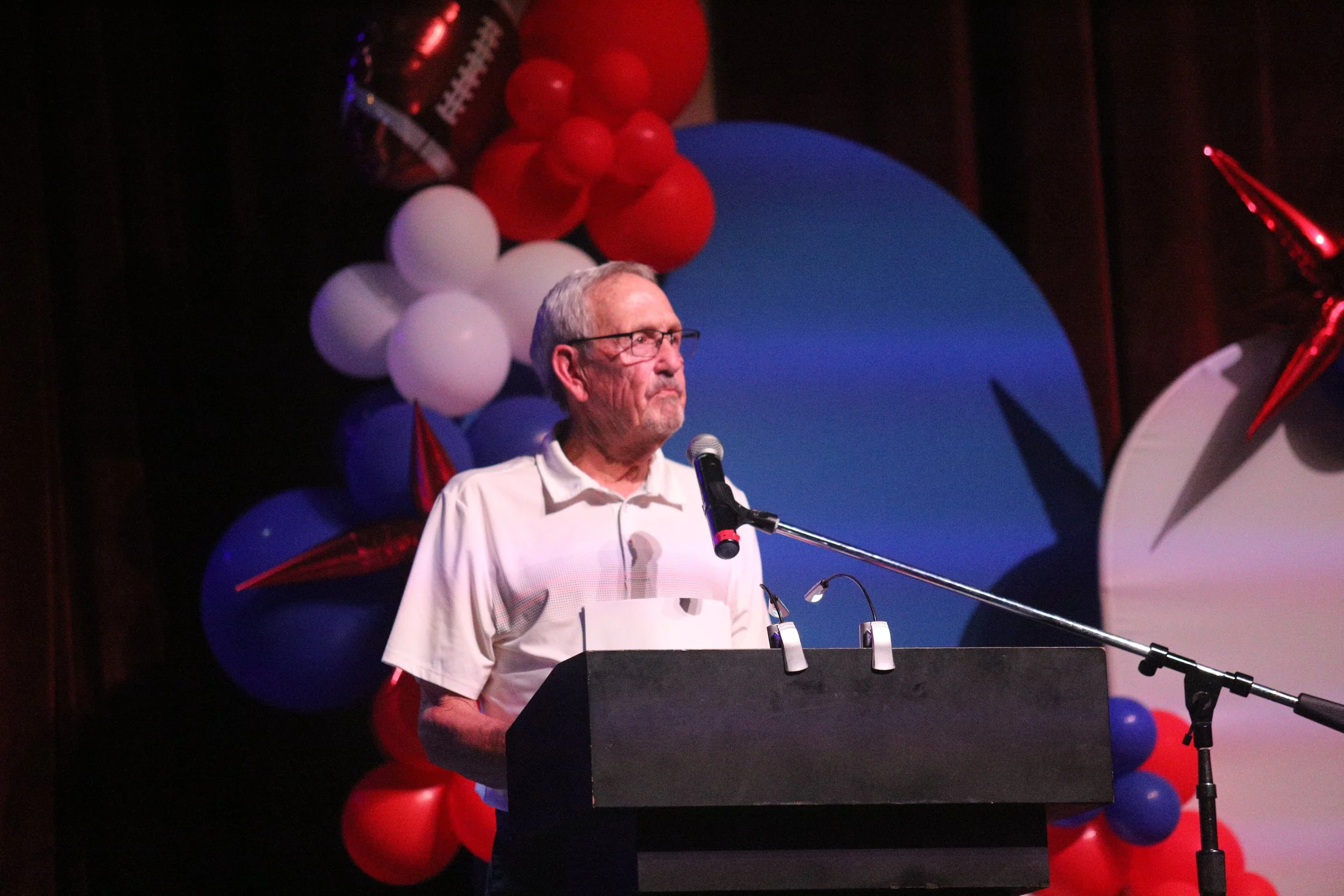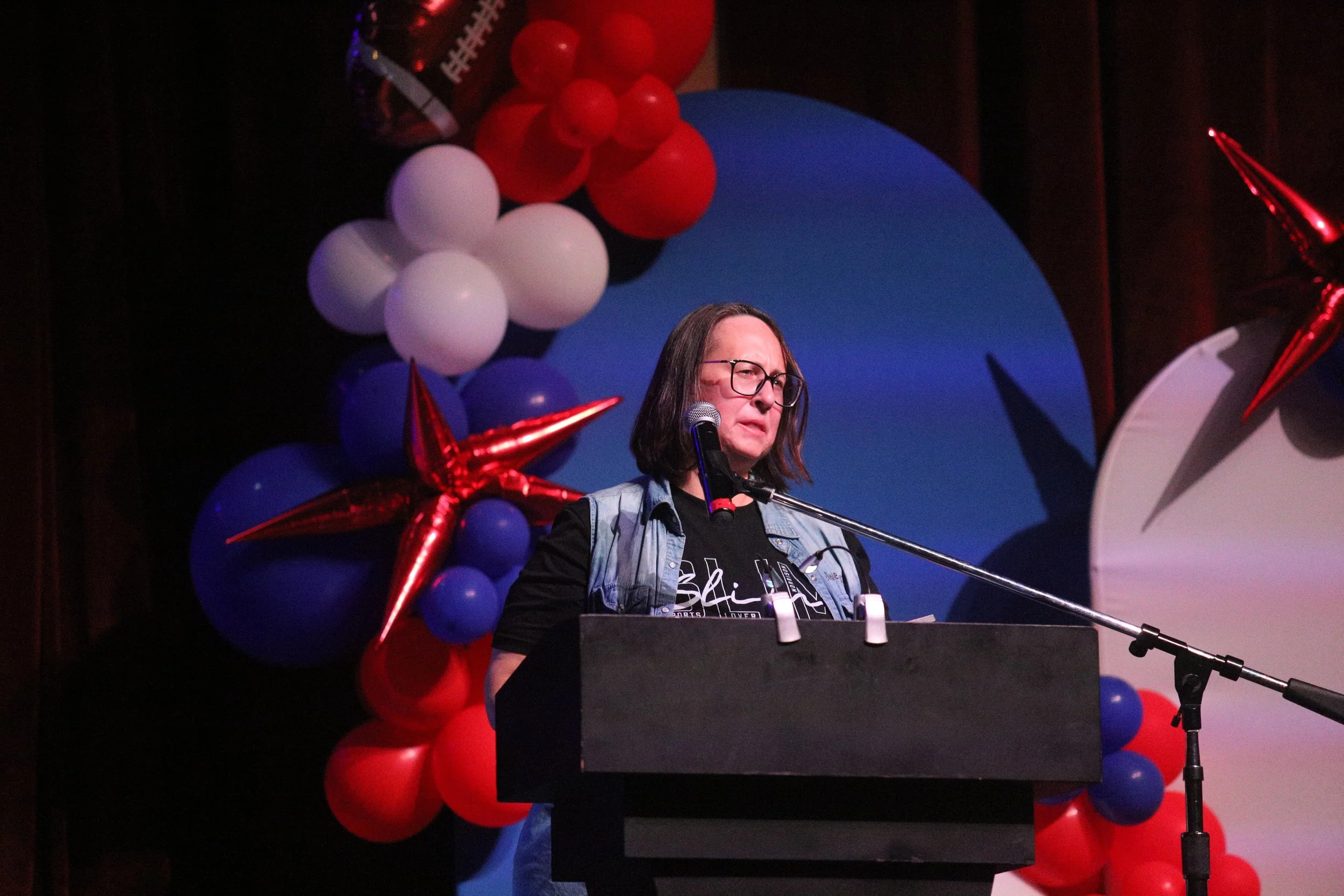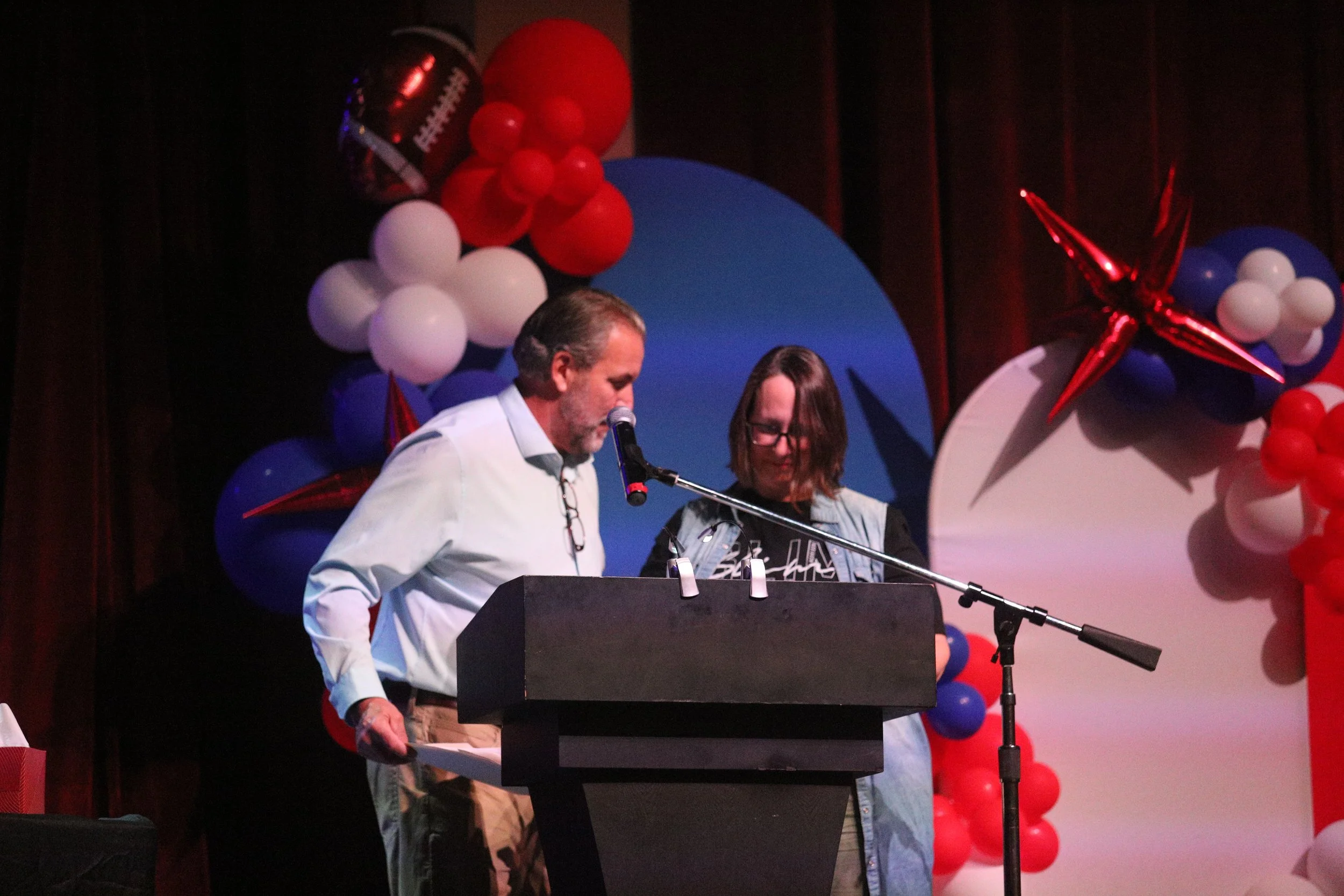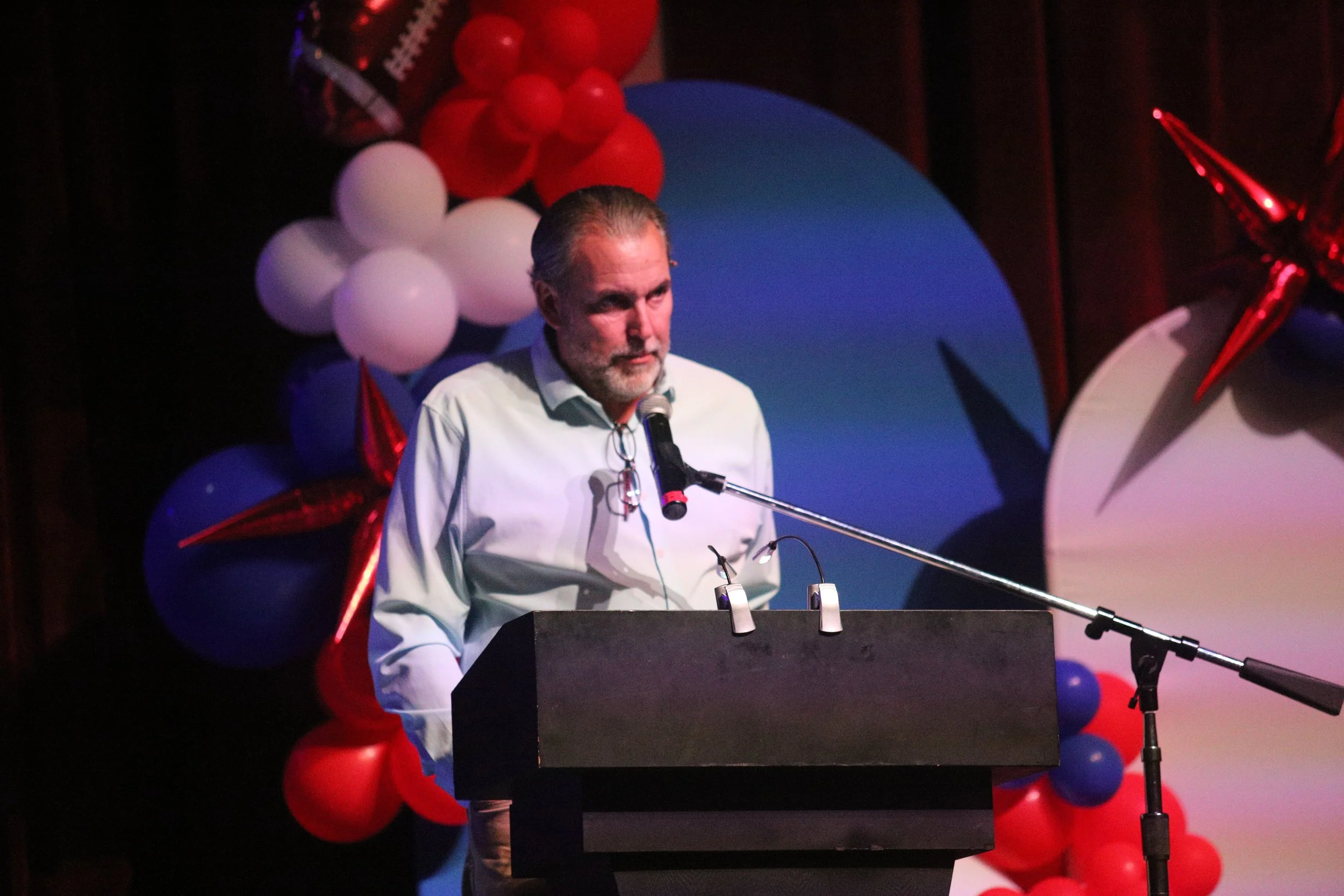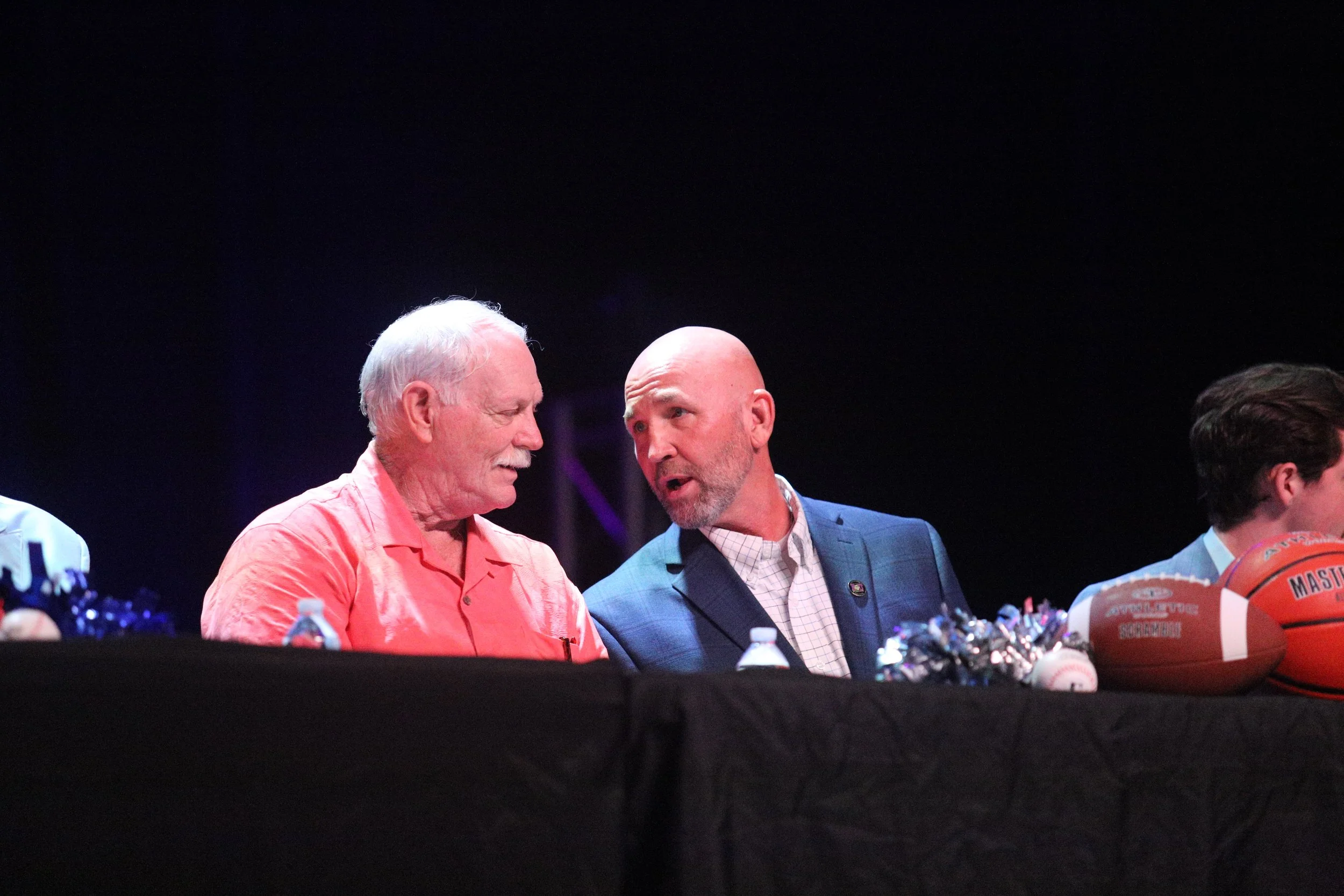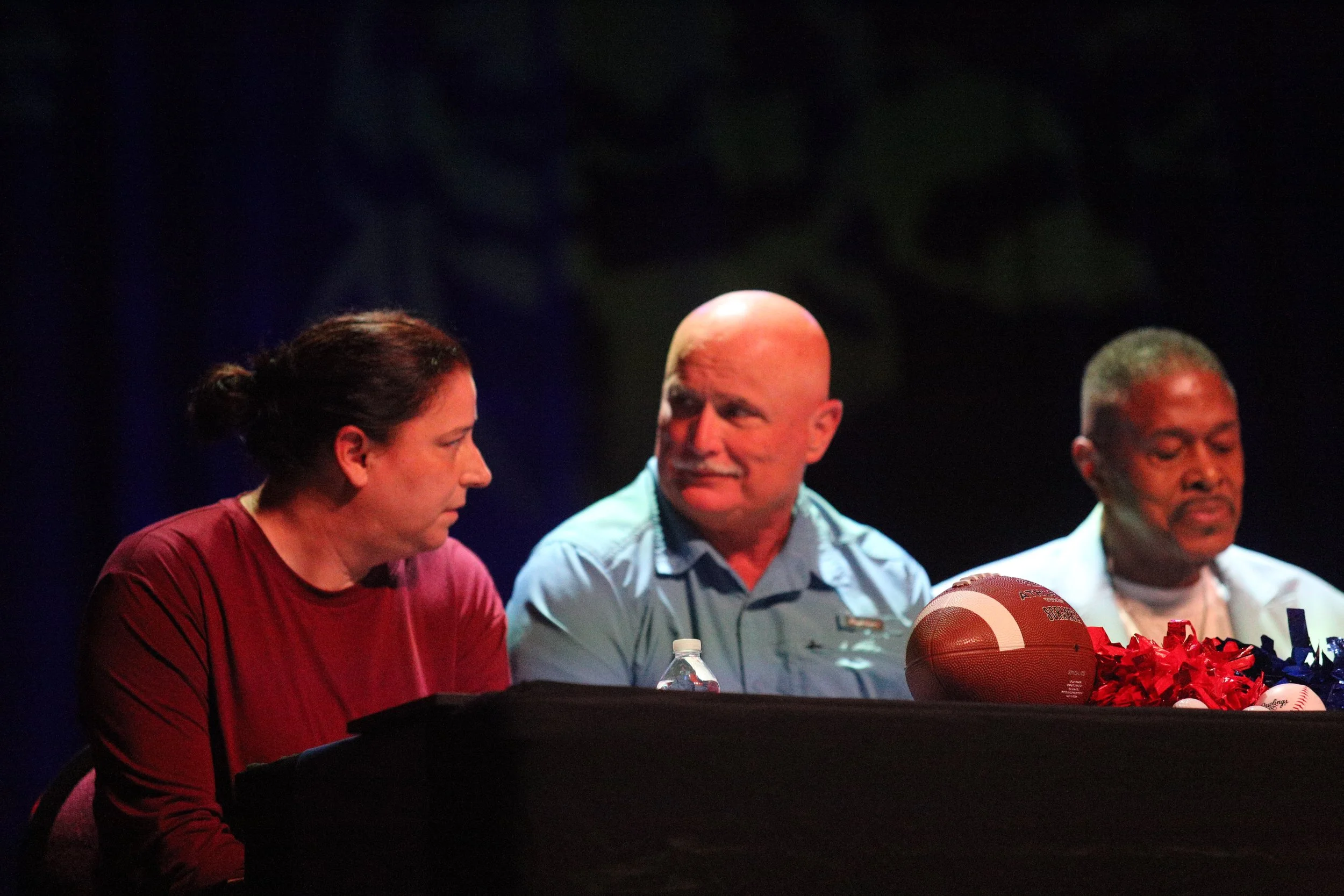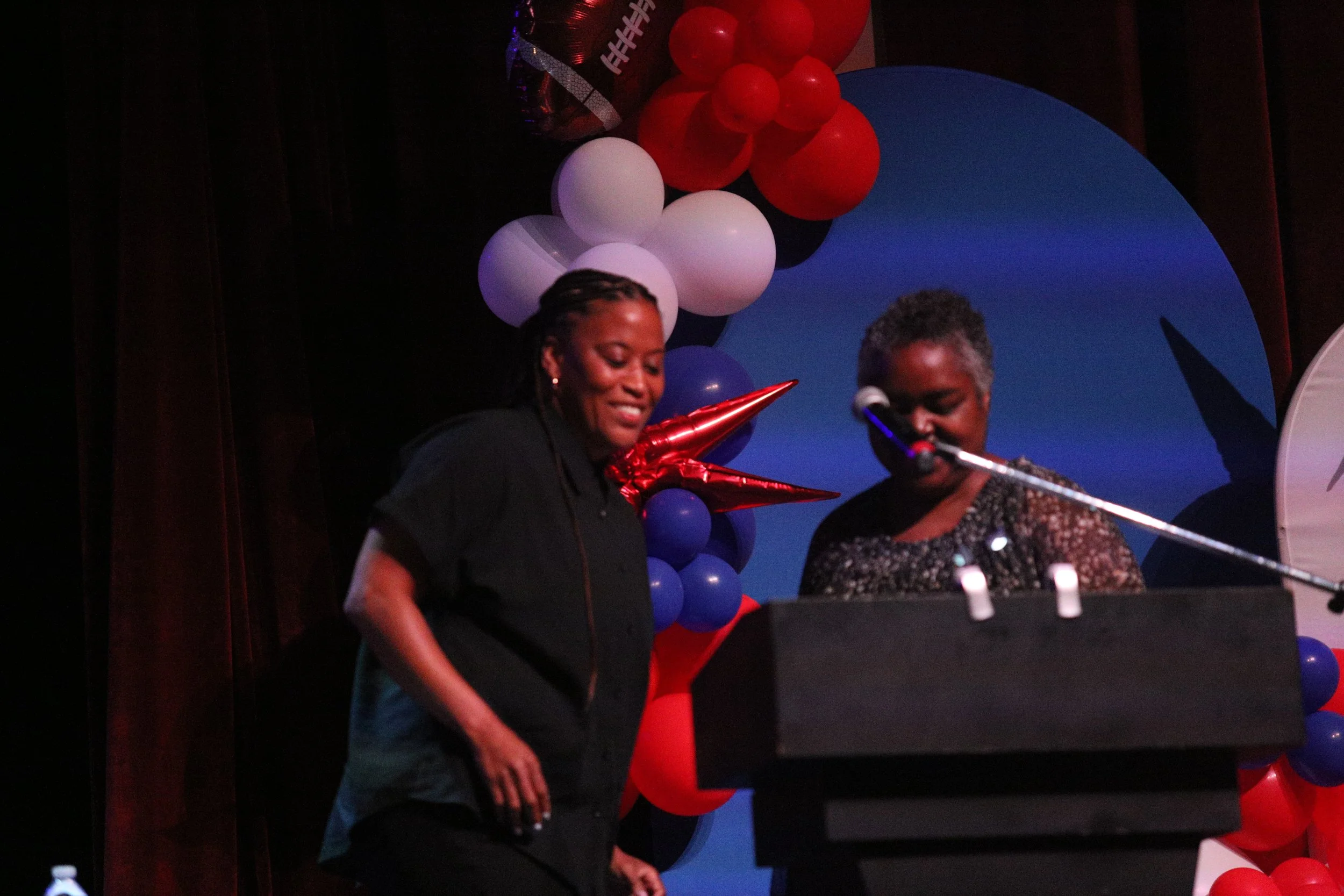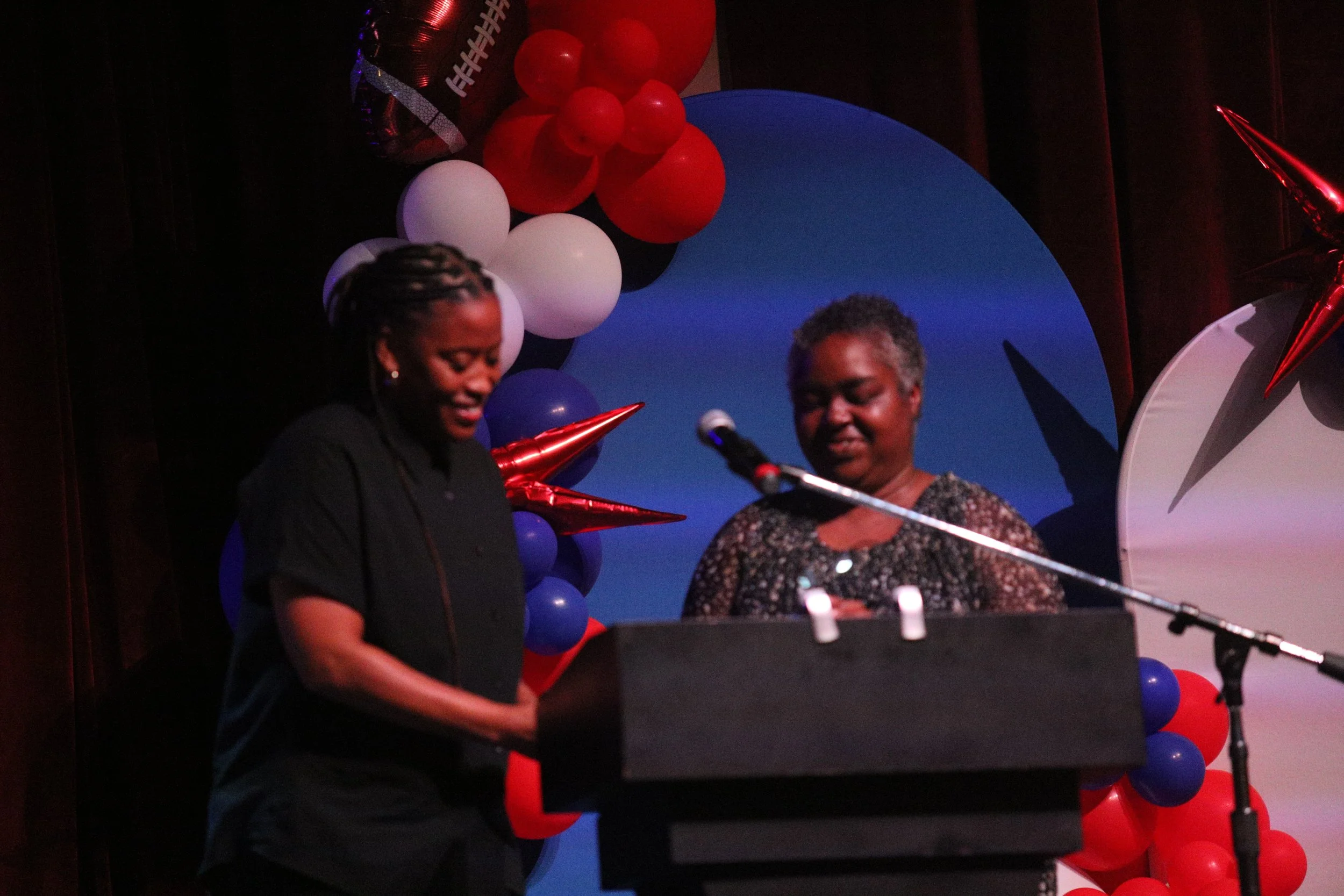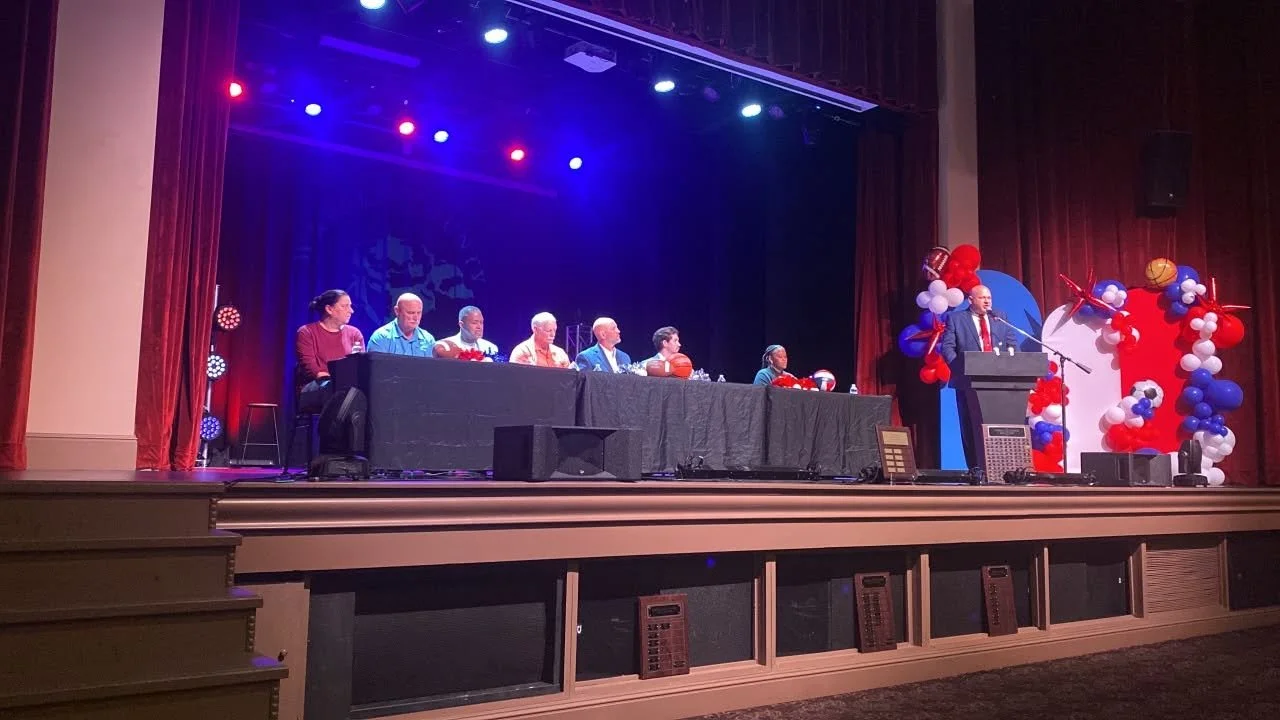
The Warren County Sports Hall of Fame welcomed its newest class during its 2026 celebration ceremony Saturday at The Park Theater, honoring eight people whose contributions to local athletics span generations.
Jessica Grayson, Charles “Slim” Ingalls, Greg King, Phillip King, Andy Link, Raymond Martin, Jimmy Walker and Jennifer Wilson comprised this year's class. Their stories cover everything from championship teams and record-setting individual careers to coaching, mentorship and the unwavering support of Warren County athletics.
The ceremony also provided plenty of reminders that the Hall of Fame is about more than statistics. Family members, former coaches, teammates and friends introduced the inductees, sharing stories about the people behind the accomplishments before each was officially welcomed into a group that now includes many of the most recognizable names in Warren County sports history.
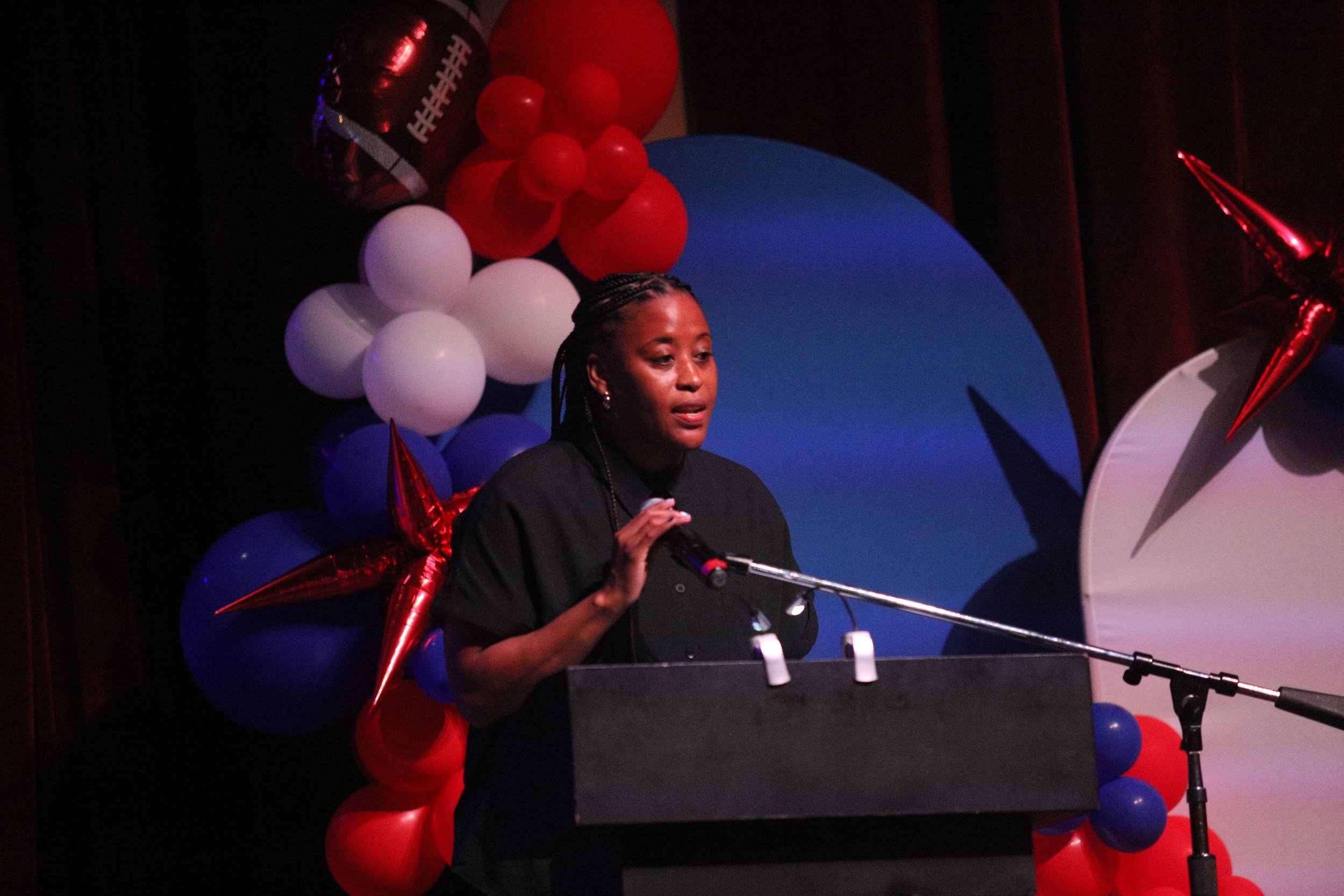
Jessica Grayson
Jessica Grayson may have built a basketball career that carried her far beyond Warren County, but when she took the stage Saturday as a member of the Warren County Sports Hall of Fame, much of her attention was focused on the people and place where her journey began.
Introduced by Rita Ramsey, Grayson entered the Hall of Fame after a standout career that began with the Lady Pioneers. A multi-sport athlete at Warren County High School, Grayson was a powerhouse on the basketball court, scoring more than 1,000 points during her prep career while earning all-district honors and being named Most Athletic as a senior.
Her basketball career continued at Austin Peay, where Grayson was part of an OVC championship team and competed in the NCAA Tournament. She later moved into coaching, building a career that has included championships and NCAA Tournament appearances. She is currently on the staff at West Virginia University, part of a leadership group that has led the Mountaineers to three consecutive 25-win seasons and NCAA Tournament berths.
But Grayson made it clear Saturday that she views those accomplishments as only part of her story.
“Being inducted as a member of the Hall of Fame is truly an incredible honor,” Grayson said. “I'm deeply grateful to be recognized and welcomed into such an elite group.”
Her speech mixed humor with emotion and a heavy emphasis on faith. Early on, Grayson joked about whether everyone in the audience believed she belonged in the Hall before quickly making her own feelings clear.
“I know I belong,” Grayson said. “Don't mistake my confidence for arrogance. I'm not arrogant, I'm anointed.”
Grayson explained that the confidence comes from believing she has a larger purpose. Her goal now, she said, is not simply to enter rooms herself but to make others feel as though they belong there too, while developing leaders and helping other people win. That theme carried throughout her speech as Grayson repeatedly shifted the attention away from herself.
“The better question is, what did this season give me? Who did I become? Who did I help? Who did I impact? Who did I carry with me?” Grayson said.
For Grayson, induction into the Hall of Fame was not an individual accomplishment.
“As I walk into the Hall of Fame, we all walk into the Hall of Fame together,” Grayson said. “This honor does not belong to me alone.”
She thanked the people who believed in her, prayed for her and encouraged her throughout her journey, adding, “No one succeeds alone.”
Among those singled out were the people who nominated her and kept track of her accomplishments through the years, along with former coaches Monica Moore, Janie Brock, Eric Wilson and Mike Shockley. She also recognized Jeffrey Martin for the role he played in her life, saying representation was important to her success.
Some of Grayson's most emotional remarks were reserved for her family.
She remembered her father through their shared love of basketball, joking that if anyone had ever asked him who would win a game between his daughter and Michael Jordan, his answer would have been Jessica.
“My dad would say me, just because he believed in me that much,” Grayson said. “I hope I've made you proud.”
Grayson also remembered her late sister Deanna, telling her she remained loved and missed and expressing regret that they could not share the Hall of Fame moment together. She thanked her sister Marlena for remaining in her corner through both the good and difficult times.
Grayson credited her mother with making sacrifices so she could pursue her dreams, saying the Hall of Fame honor may carry Jessica's name but a large part of it belonged to her mother.
“Mom, I'm so grateful that God blessed me with a praying mother,” Grayson said. “I truly believe I'm standing on your prayers.”
After a basketball career that took her to the college game and a coaching career that has continued to carry her around the country, Grayson finished her speech where the story started: Warren County.
“When I think of Warren County, I think of hard-working, blue-collar people,” Grayson said. “I think of honest people - People of faith, people with integrity, people who get up every morning and show up for others.”
Those, Grayson said, were the values she carried with her wherever basketball took her.
“No matter where life has taken me, Warren County will always be home,” Grayson said. “Thank you for raising this small-town girl.”

Artwork from Seth Wright that is now at the Morrison Gym of superfan Slim, a Class of 2024 WC Sports Hall of Famer who was officially inducted Saturday.
Charles ‘Slim’ Ingalls
Charles “Slim” Ingalls never needed a uniform, a stat line or a spot on a roster to become one of Warren County’s most recognizable sports figures. He just had to show up - and he almost always did - and say three words everybody knows by heart now, “Believe in Yourself!”
Ingalls was honored posthumously Saturday with induction into the Warren County Sports Hall of Fame, with longtime friend Steve Harvey sharing stories about a man who became a fixture along sidelines and in gyms throughout the county. Carolyn Brewer, Ingalls’ first cousin, was also on hand to accept the honor on behalf of the family.
Harvey said his first memory of Slim came at Morrison Gym while Harvey was still playing basketball.
“I didn’t know who he was at the time, but I remember seeing him, and after that, he just always seemed to be there,” Harvey said.
That became Slim’s reputation.
Whether it was baseball, softball, football, basketball or another local sporting event, Slim could often be found nearby. And, more often than not, he arrived by walking to the games, especially those featuring the Morrison Eagles or the Pioneers.
Harvey remembered Ingalls as the type of fan athletes and coaches could count on regardless of the scoreboard.
“As we all know, Slim is one of Warren County’s greatest sports fans,” Harvey said. “He was the kind of fan that was always positive. He didn’t bad mouth the coach or the players.
“He always thought we had a chance to win, especially if you would just believe in yourself.”
While “Believe in yourself” became Slim’s signature phrase, but it was hardly the only instruction he offered from the sidelines. Harvey recalled Slim encouraging hitters with “Head down and drive” and pitchers with “Knee level,” messages that became familiar to generations of players.
And while they were great instructional tips, his go-to phrase was one that could be and, according to Harvey, should be applied to everyday life.
“Believing in yourself can make a difference in whether you succeed or fail,” Harvey said. “And then the really cool thing is when you grow up and realize that it’s also great advice in real life. You can’t do great things if you don’t believe in yourself.”
Harvey also shared stories that showed just how uniquely Slim moved through Warren County sports and through life.
During one youth baseball trip, Harvey was coaching a team that included his son Patrick and nephew Mark. The group traveled to a regional tournament and arrived in the middle of the summer heat. Everybody else wanted to get out of the heat, but Slim set out walking.
“I said, ‘Slim, where are you going?’” Harvey recalled. “He said, ‘I’m going to see a friend.’ And he just walks off right there in all that heat.”
But by the time the game was underway, there he was again.
“Head down and drive, head down and drive,” Harvey remembered hearing from the stands. “To this day, I have no idea where he went, who he went to see, but it seemed like he knew people everywhere.”
Another story had nothing to do with sports.
Harvey recalled Christmas Eve gatherings at his parents’ home when family members would take turns reading lines from “The Night Before Christmas.” Slim sat quietly as the reading moved around the room, passing on his turns.
Later, as Harvey prepared to take him home, Slim stopped at the door and looked back at everyone before leaving them with “Merry Christmas to all and to all a good night.”
“We didn’t always think he heard us. We didn’t always think he understood what was going on,” Harvey said. “But he sure did. He sure did.”
After Harvey finished, he recognized Brewer, who helped care for Slim, especially later in his life.
Brewer arrived wearing a Slim shirt and carrying a “Believe in Yourself” bracelet, two reminders of how much his message continues to mean to those who knew him.
“He was a unique character and I’m a better person for him,” Brewer said. “There’s some things that he did in life that I wish I was more like him.”
Brewer also shared one detail that made Saturday’s ceremony especially meaningful: Slim knew.
“I know he knew the day before he passed away that he was going to be inducted into the Hall of Fame,” Brewer said. “And I just am so grateful that he did know.”
Brewer thanked those who supported Slim through the years, saying it touched her family to know how many people considered him a friend. She also joked that Slim’s attention to detail was not limited to ballgames. He knew she needed to leave for work at 7:15 a.m. each morning and would call her right on time to make sure she was on the road.
“If I wasn’t, I would say no, but I’m on my way to the car,” Brewer recalled.
Slim’s impact on Warren County sports was different from most people whose names appear in the Hall of Fame Saturday - legendary coaches, all-time scorers, larger than life athletes with great careers. Slim’s story was different - he just showed up every day to be a supporter.
He walked to games, cheered, encouraged and got to know the athletes, coaches and fans. He believed Warren County could win and spent years telling its young athletes to believe the same thing about themselves.
That presence eventually became so synonymous with Morrison sports that Morrison Elementary’s gym was renamed the Slim Gym in his honor. And now the fan who spent so many years watching Warren County’s athletes take their place in the spotlight has a permanent place beside them in the Warren County Sports Hall of Fame.
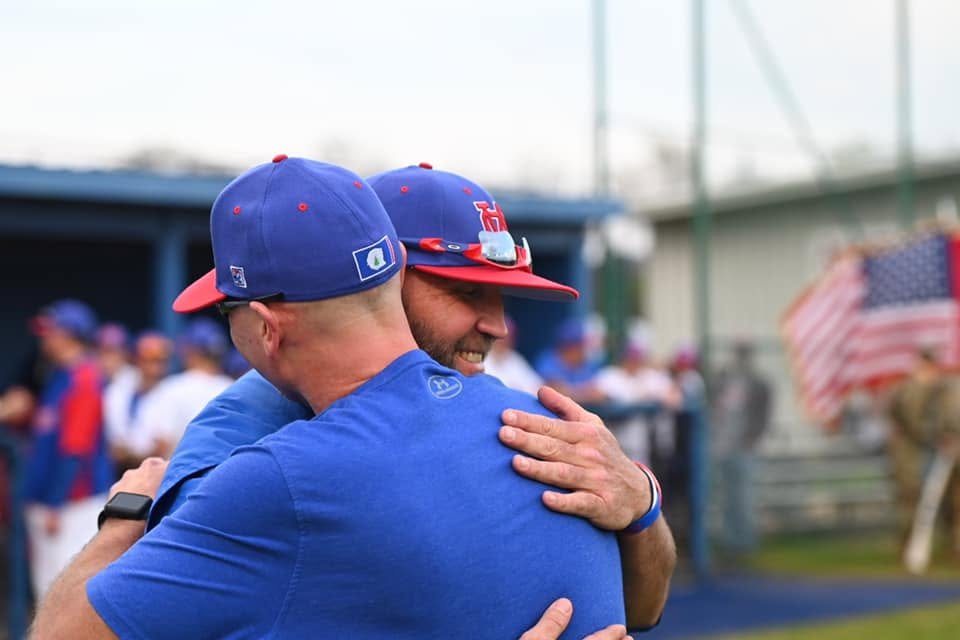
Greg and Phillip King share a hug on the diamond at Patrick Ramsey Field after Greg came back to throw out a first pitch.
Greg and Phillip King
For Greg and Phillip King, induction into the Warren County Sports Hall of Fame was another chapter in a story the brothers have shared almost from the moment they were old enough to pick up a ball. They grew up competing with each other, pushed one another to improve and eventually became standout athletes at Warren County Senior High.
Their careers took different paths after leaving McMinnville, but Saturday the brothers were reunited in another way, entering the Hall of Fame together.
Ronnie Brown, having coached both, had the honor of introducing Greg and Phillip at Park Theater. He recalled two athletes who possessed plenty of ability but were also expected to learn discipline, work hard and become team players.
Greg, Brown said, was “the most pure hitter I’ve ever seen.”
He backed that assessment with a story from Warren County’s 1987 baseball season. The Pioneers were on the road in a game Brown remembered they weren’t expected to win in Cookeville, and Greg was taking relentless abuse from students standing behind the center-field fence.
Greg kept his composure. Then he came to the plate.
“He hits a home run that went right in the middle of those guys,” Brown recalled, noting how the heckling stopped immediately when the students went ducking for cover. “It was perfect - it was absolutely perfect.”
Brown also remembered having to rein Greg in occasionally. In another game, Greg ignored Brown’s stop sign at third and scored. When an excited Greg came toward his coach to celebrate, Brown delivered a different message.
“I said, ‘I’m going to tell you something, buddy. You run through my stop sign again, and your butt won’t be on this field. It’ll be sitting in that dugout,’” Brown recalled.
It didn’t happen again.
“(Greg was) A good player - a great player - but he needed to be a team player, and he was,” Brown said.
Greg was a three-year starter in both baseball and basketball at Warren County, earning all-region and all-district honors. He was an original member of the Americans Baseball Program and was part of the 1987 Pioneer team that won the district championship, Warren County’s first since 1978.
His baseball career continued at Columbia State and UT Martin, where he set single-season doubles records at both schools. He was inducted into the UT Martin Athletic Hall of Fame in 2005.
Greg was unable to attend Saturday’s ceremony, so Grant King stepped forward to read Greg’s prepared remarks. Greg wrote that his Warren County induction carried a different significance than even his induction at UT Martin.
“I can’t even begin to express how honored I am to be a part of the Warren County Sports Hall of Fame,” Greg wrote.
At UT Martin, Greg had been proud to enter the same Hall of Fame as legendary Tennessee women’s basketball coach Pat Summitt, and his wife Ellen later joined him as a UT Martin Hall of Famer. But the Warren County honor connected Greg to the athletes he grew up admiring.
“I am now being put into a group with the people who I wanted to be when I was a kid,” Greg wrote. “The first autograph I ever got in my life was Lester Strode.”
He mentioned Dennis Mix, Jeff Womack, Russ Spivey, Danny Martin and Jimmy Walker among the local athletes he admired, while also noting how special it was to be reunited in the Hall with people he grew up alongside.
“I played ball with a lot of the newer inductees and it is great to be back on the same team as them again,” Greg wrote.
Greg credited his parents with giving him and Phillip opportunities to play from an early age and remembered McMinnville as an ideal place to grow up playing sports.
He also credited his coaches - His father and Jeff Golden coached him in T-ball and baseball before Doug Reid joined them. The Americans Baseball Program allowed Greg and other Warren County players to travel and discover they could compete with strong teams from outside the area.
At the high school, Brown and Franklin Fisher became important influences in baseball, while Andy Jacobs and Mike Jacobs helped change the direction of Greg’s basketball career. Greg revealed he nearly gave up basketball before his sophomore year after a poor junior-high experience.
“Thank goodness I didn’t,” Greg wrote.
He credited Andy Jacobs with seeing something in him others had not and giving him an opportunity. Greg responded by playing as hard as he could to prove the coach right, eventually becoming a three-year starter in both sports.
Then Greg turned his attention to his younger brother.
“I also don’t think I would have been able to reach some of my goals and accomplish the things I did without Phil,” Greg wrote.
The two spent their childhood playing in front yards, backyards, driveways, ball fields, tennis courts and essentially anywhere they could invent a competition.
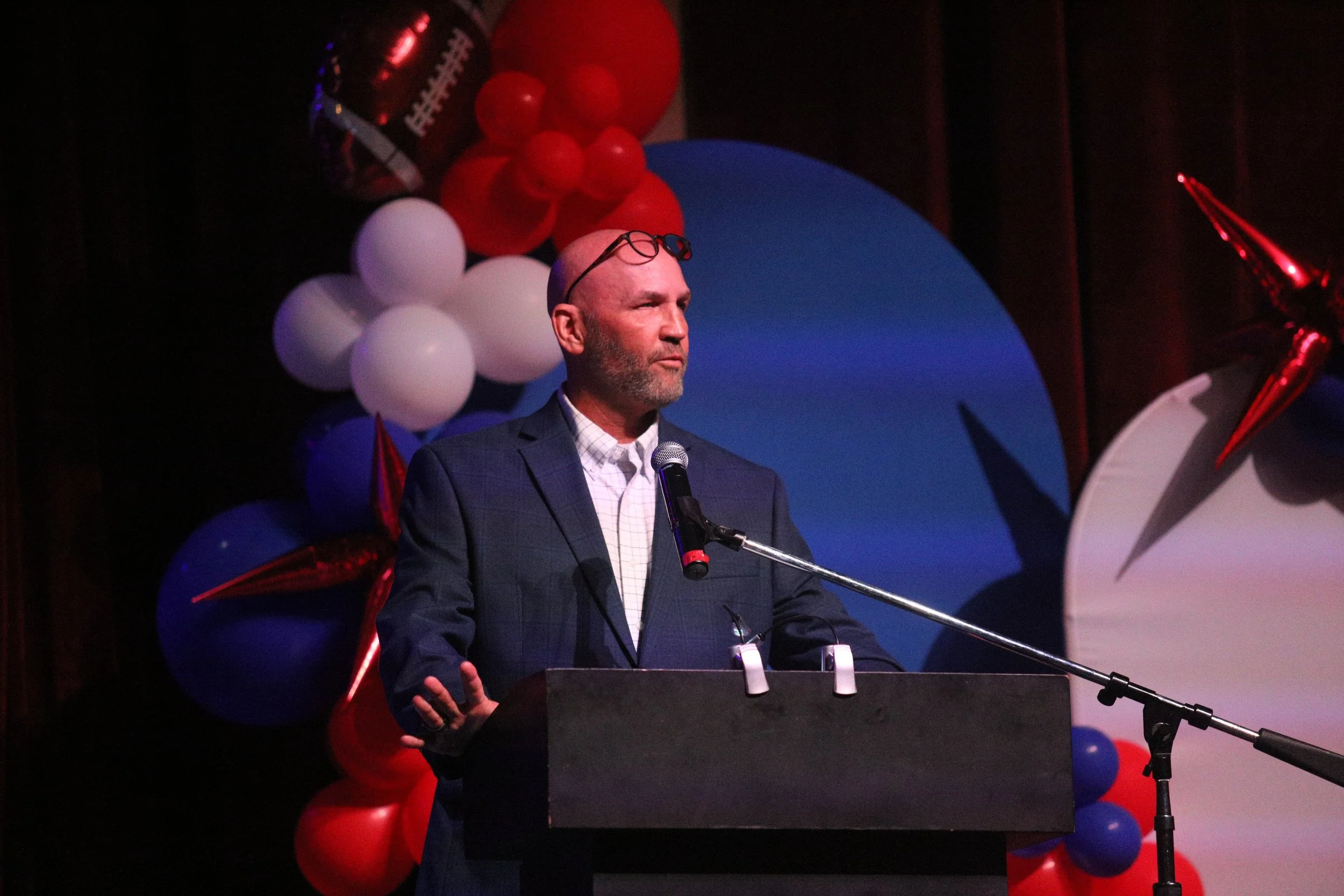
Decades later, Phillip was able to return the compliment from the Hall of Fame stage.
Phillip was there in person Saturday and admitted his speech had nearly been much less organized. When his wife asked at their son’s middle school football game whether he had prepared his remarks, Phillip told her he planned to wing it.
By the next morning, he had reconsidered.
Still, Phillip didn’t need notes to explain what growing up as Greg King’s younger brother meant.
Their athletic roots ran deep. Phillip recalled a competitive household with two accomplished athletes for parents. Their mother had been a standout six-on-six basketball player, while their father was the McCormick Award winner at City High School in 1965.
Then there was Greg.
“I had a front-row seat to watching one of the greatest athletes that’s ever come through Warren County High School,” Phillip said.
Phillip admitted Greg wasn’t always the easiest older brother before deciding now that “I look back later on and I realize that what he was doing was pushing me.”
Phillip became a star athlete himself, competing in baseball and football at Warren County. He was a member of the 1987 and 1989 district championship baseball teams, earned all-district honors and received the Jimmy Jones Memorial Football Award in 1988.
His baseball career continued at Bethel College, where he was a three-year letterman and starter. He led Bethel in singles, walks and stolen bases and was inducted into the Bethel College Athletic Hall of Fame in 2008.
Yet much of Phillip’s speech Saturday wasn't about his own résumé - It was about where all of it started.
Phillip painted a picture of growing up in McMinnville in the 1970s and ’80s, when a bicycle could take a kid from one competition to the next.
There might be a home run derby or Wiffle ball game at one house, basketball at another and a trip across the bridge to the Civic Center would follow to attend another game waiting somewhere else.
“I wanted to play any sport that we could play at any time that we could play it,” Phillip said.
Being the younger kid around Greg and other older athletes meant Phillip had little choice but to figure out how to compete.
“There was a lot of drive and a lot of determination involved in that,” he said.
His parents helped fuel that drive. Phillip remembered preparing for a regional baseball game and wanting extra work while his father was away at National Guard camp. He convinced his mother to take him to the Civic Center, where she hit him fungoes on the Babe Ruth field.
It was a simple memory, but one Phillip used to illustrate how much his parents invested in their sons.
Phillip also paid tribute to the coaches who shaped him, including Brown, Fisher and Jimmy Walker - a trio he referred to as his “Mount Rushmore of Warren County baseball.”
And because of their dedication to building the sport, Phillip spoke proudly about being in a position now, as Warren County High School’s head baseball coach, to make sure the people who built the program are remembered.
In recent years, the Pioneers have retired jerseys and honored former greats at the baseball field.
“When I put Warren County or Pioneers across my chest, the WC on my head with a hat, it means something,” Phillip said. “It’s really special.This community means a lot to me, it means a lot to my family, it means a lot to my brother.”
Of course, it was Greg - along with another Hall of Fame inductee Saturday - who helped get him into coaching.
“I wouldn’t be coaching today if it wasn’t for Greg,” he said, noting the advice he got from his brother after graduating. “Baseball - that’s what we’ve done our whole life. He said, ‘You get up, you go to school, you go to practice, you go to the game, you go home.’ He pushed me to coaching.”
Walker then gave the young coach an opportunity, beginning a career that eventually brought Phillip back home to lead the Pioneer baseball program. Along the way, Phillip also worked under Hall of Fame coaches at Motlow and Bethel and received opportunities from Hall of Fame athletic directors in Franklin County and Tullahoma.
His final thank you went to his wife, whom het met while playing ball at Bethel.
“My wife Ashley is my best friend,” Phillip said. “She is the rock. She has been through the good times, the tough times. She supported me every bit of the way.”
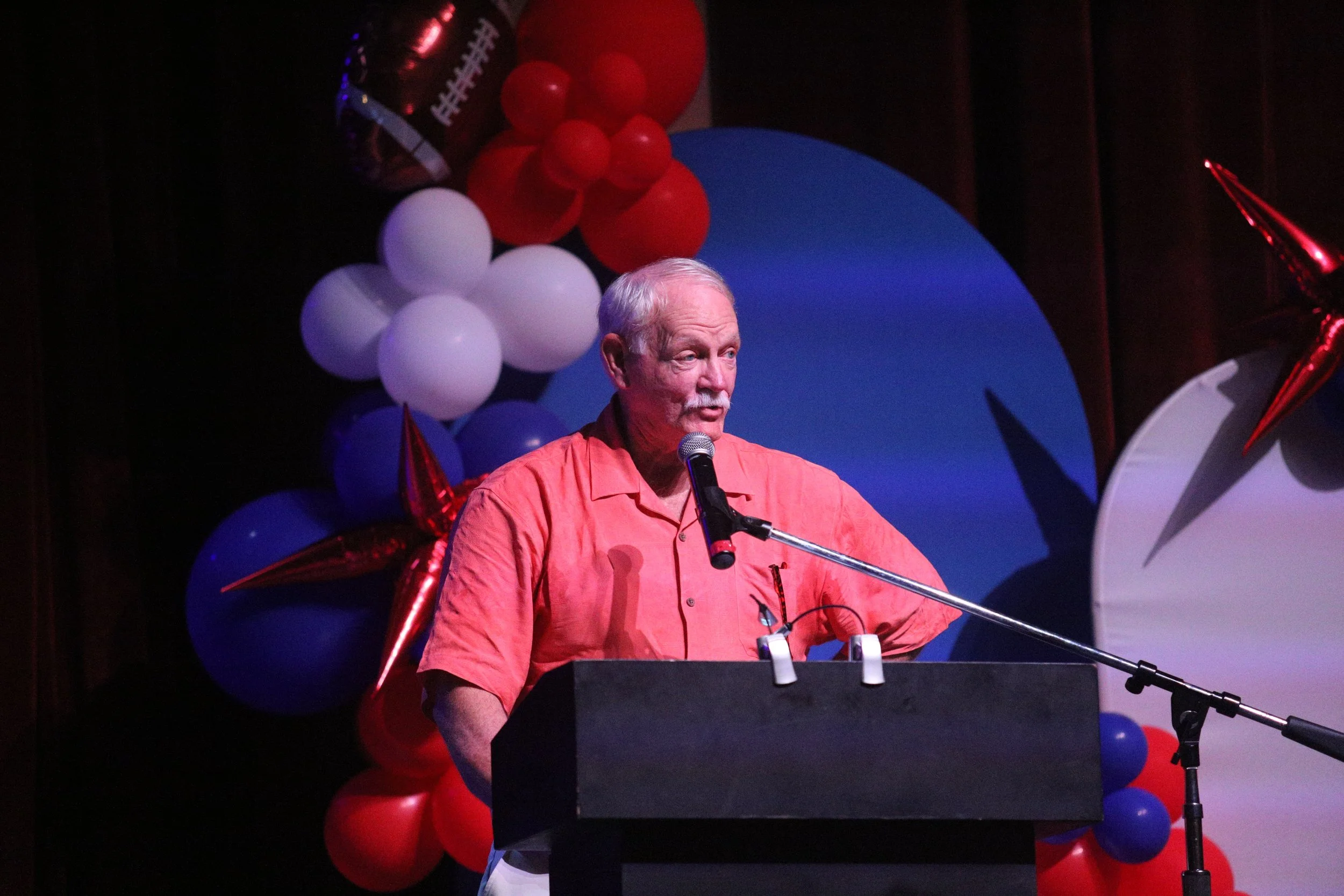
Andy Link
Andy Link’s induction into the Warren County Sports Hall of Fame celebrated a three-sport standout whose athletic career helped span the transition from Central High School to the newly formed Warren County Senior High School in 1969.
His daughter, Jena Link, handled the introduction and said her father's competitive nature and work ethic developed early as the fifth of eight children.
One story captured both. As a youngster, Andy would wait for his older brother Jerry to finish baseball practice, then take the shoes off his brother's feet so he could wear them for his own practice.
“That’s not just resourcefulness,” Jena said. “That’s determination and making the most out of what you have.”
Link made plenty out of his opportunities.
He lettered in baseball, football and basketball, with baseball becoming one of his strongest sports. Link lettered five years, from eighth grade through his senior season, and pitched varsity baseball from ninth through 12th grade. He threw a no-hitter against Unionville as a junior, when he also batted .313, then tossed another no-hitter against Rockvale during his senior season.
On the football field, Link lettered three years and started at quarterback as a sophomore under Pedro Paz. After the consolidation of the local high schools, Link became the first starting quarterback in Pioneer history.
He was also a three-year basketball letterman, playing his first two seasons at Central before becoming Warren County's starting point guard as a junior and senior. Link was student council president, finished in the top 10 percent of his class and was voted Most Athletic Boy his senior year.
Jena said her father's impact continued long after his playing days through coaching youth football and baseball and, most importantly to his family, through the example he set at home.
“My brother, my sister and I grew up knowing two things for certain,” Jena said. “Dad loved us deeply, and if we needed him, he would drop anything, no matter what, to help.”
Link kept his own acceptance speech short, joking that he was “a man of few words” unless he was “telling somebody how to do something right.”
He recalled growing up in an era when much of his time was divided between sports and work. Whether helping his father, mowing, gardening or handling chores around the house, Link learned early the value of working for what he wanted.
His coaches reinforced those lessons. Link remembered learning basketball fundamentals from coach Palmer and playing football for Paz, whom he jokingly described as the “roughest man I ever seen in my life,” before quickly adding that Paz knew how to coach.
One lesson from Paz stuck particularly well - After Link stayed out fishing all night and arrived 10 to 15 minutes late for a football scrimmage, he discovered Paz had already taken his uniform.
Decades later, Link could appreciate the message. “That was the first time I’d ever thought about learning about being on time,” Link said.
Link finished by passing along a lesson of his own to the young athletes in attendance.
“To the youth here, I say, work hard,” Link said. “Whatever you do, you will never regret trying to be better. You will regret never trying.”
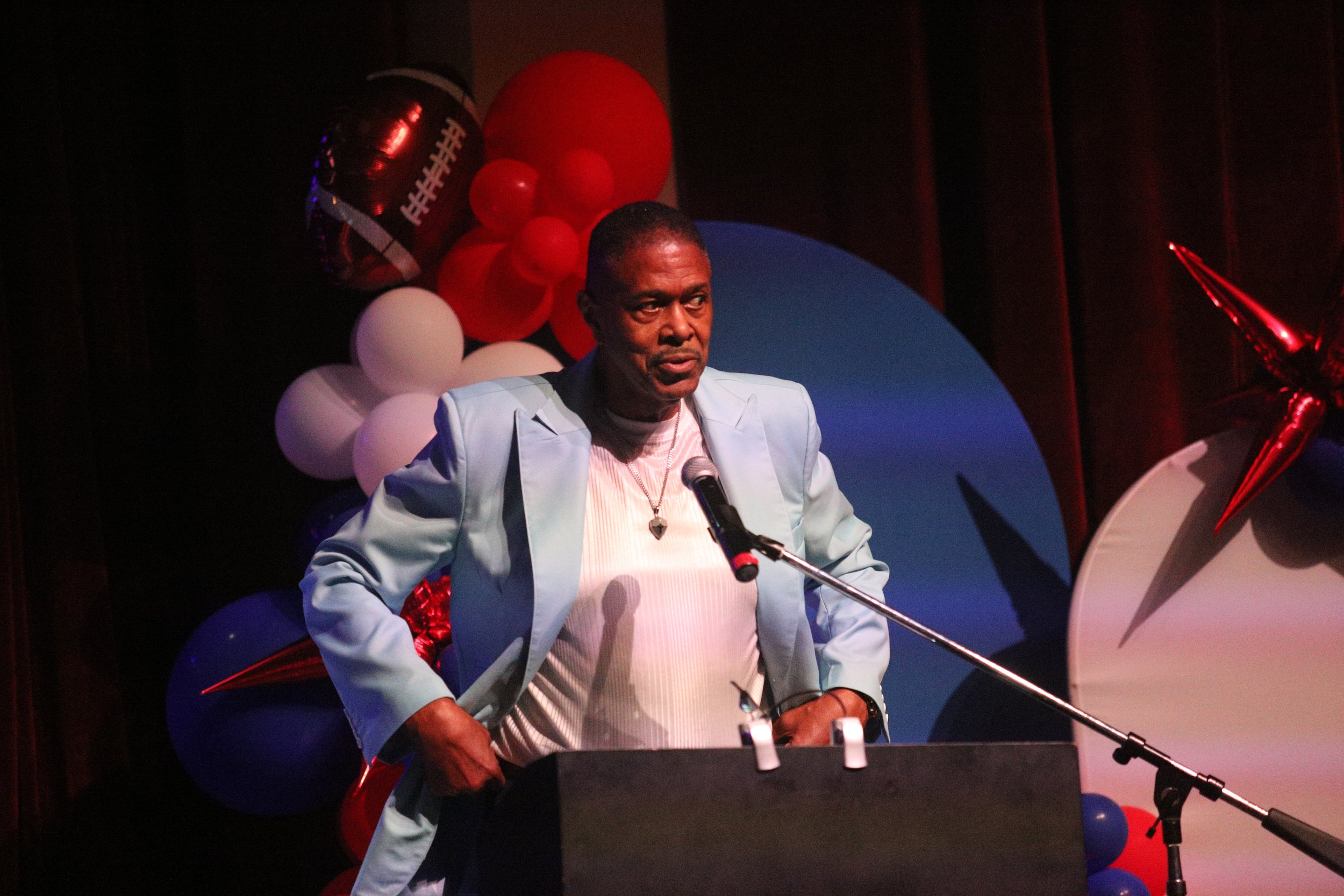
Raymond Martin
Raymond Martin’s path into the Warren County Sports Hall of Fame was built around his place in one of the strongest eras of Pioneer basketball.
Martin was introduced Saturday by Jeff Martin, who described him as a “dominant force on the court” during the 1970s.
Raymond helped Warren County Senior High win back-to-back district championships in 1976 and 1977. As a senior, he averaged more than 20 points and 14 rebounds per game while leading the Pioneers to 16 victories. His basketball career continued at Middle Tennessee State University, where he played under fellow Warren County Sports Hall of Famer Jimmy Earle.
Martin didn't bring prepared remarks to the stage Saturday - joking “I must not have gotten the memo.” Instead, he used his induction to thank the people who made his basketball career possible.
He first recognized his late mother, along with his wife, children, grandchildren and siblings.
“I know my mom, she was one of my strongest supporters,” Martin said. “When I would come home from a game, I could see the excitement.”
Martin also thanked the coaches who worked with him from middle school through high school, crediting them with helping develop him into the player who eventually earned an opportunity to play college basketball.
Growing up playing basketball in Warren County, Martin said, remains special to him decades later.
Part of what he remembered most was the support surrounding the Pioneers. Win or lose, Warren County fans were behind the team, and Martin said hearing them from the stands could make a difference.
“When you can hear the fans, then it always seems to elevate my game,” Martin said.
There were also plenty of rivalries. Martin rattled off several familiar opponents from his playing days, including Cookeville, Sparta, Manchester, Tullahoma and Lebanon.
“They always wanted to beat us,” Martin said. “It was always a power struggle, but we had a lot of good games during that time.”
And while those rivalries have stood the test of time, Martin knows the game has evolved rapidly. He pointed out that in his era there was no shot clock, no 3-point line and no dunking - which probably was the biggest hindrance to the towering legend on the stage Saturday.
“The game has tremendously changed,” Martin said, “and I think it’s for the better.”
Martin also expressed appreciation for the opportunity to continue playing after high school, thanking those who saw enough in him to believe he could succeed at the collegiate level.
Mostly, however, his brief remarks were about gratitude. He thanked his family, coaches, fans and everyone who supported him during his playing days before offering congratulations to the other members of the 2026 Hall of Fame class.
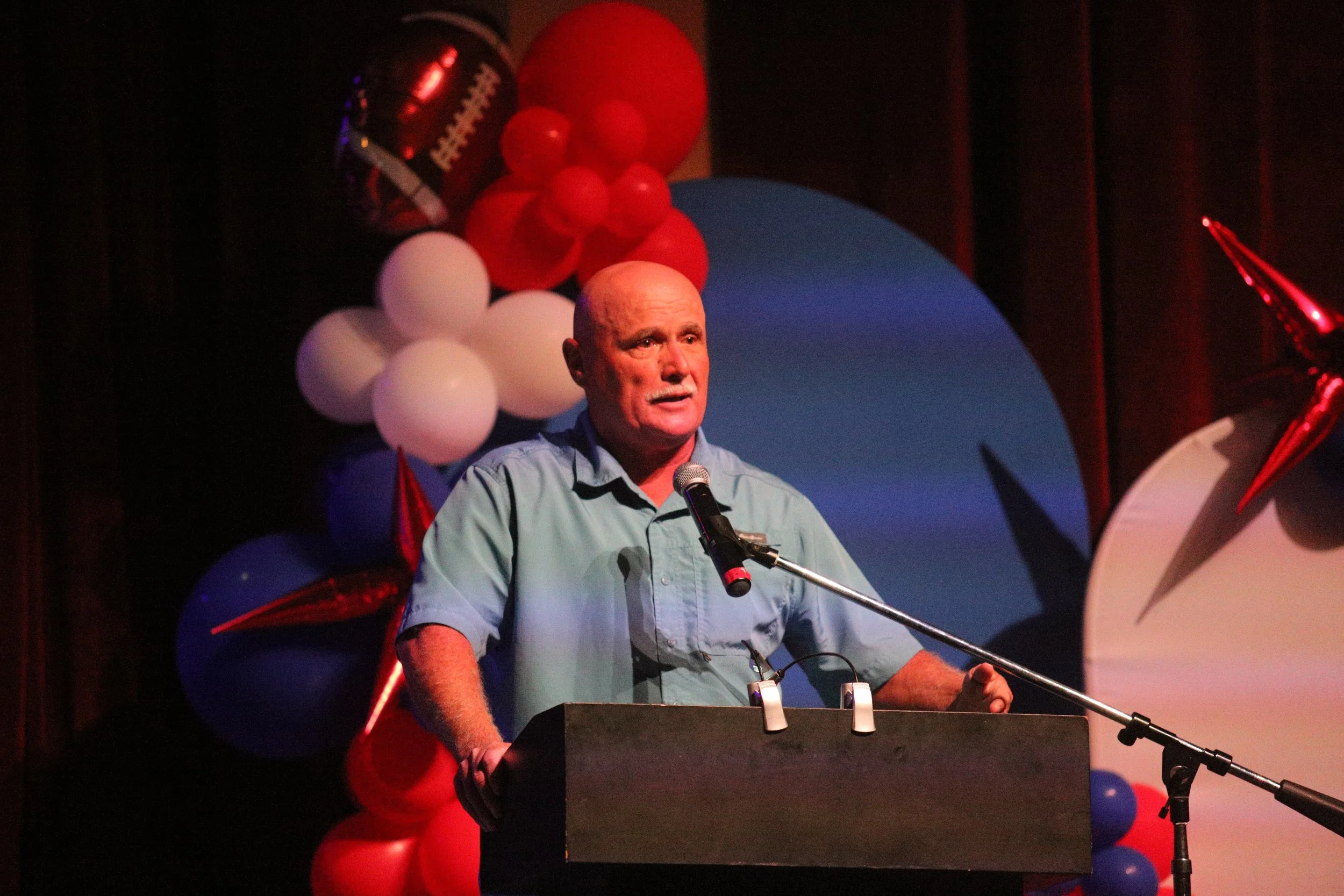
Jimmy Walker
Jimmy Walker entered the Warren County Sports Hall of Fame with a résumé that spans playing, coaching and education, but the people who spoke Saturday kept returning to one word when describing his impact: Coach.
That included fellow 2026 inductee Phillip King, who used part of his own acceptance speech to recognize Walker as one of the people who built Warren County baseball.
King grouped Walker with Ronnie Brown and Franklin Fisher as his “Mount Rushmore of Warren County baseball,” coaches he looked up to as a player and continues to honor now as the Pioneers' head coach.
For King, Walker's influence was also personal. When King was just out of college and beginning his career, Walker gave him an opportunity to coach.
“I can't say enough about Coach Walker, because Coach Walker was that guy for me,” King said. “He took a chance on me as a right out of college guy.”
King didn't leave much doubt about the significance of that opportunity.
“I wouldn't be a coach if it wasn't for Coach Walker giving me an opportunity,” King said.
Ronnie Brown, who helped give Walker his own start in coaching years earlier, also touched on the importance of that title during the ceremony.
Brown said statistics and accomplishments only tell part of the story of people who spend their lives coaching. What matters just as much is what they do for the young people who come through their programs.
“The word coach says it all,” Brown said.
For Walker, that journey began as a player.
He played at Warren County before continuing his baseball career for two years at Motlow State and then Tennessee Tech. Eventually, he found his way back to the Pioneer baseball field.
His brother, Jamie “Cat” Walker, had a front-row seat for much of it.
Cat introduced Jimmy Saturday and quickly made it clear their relationship went well beyond simply being brothers.
“He taught me how to build a fastball, two-seam, changeup, curveball,” Cat said. “He taught me about life.”
Cat credited their parents with instilling a work ethic in the family, but said Jimmy embodied it.
“You're not going to outwork my brother,” Cat said. “He gets determined to do something, whether it be farming, hunting, baseball, working with his grandkids, he's full bore. And that's the way it's always been.”
Jimmy also became Cat's pitching coach while his younger brother was still in high school.
“Coach Brown hired him for some reason,” Cat joked. “And it's the best thing he ever did.”
Jimmy's guidance didn't stop when Cat left Warren County. Cat remembered his brother dropping him off at Austin Peay in 1989 when he didn't have a car and didn't know anyone.
“He had my back,” Cat said. “My brother mentored me.”
When it was Jimmy's turn to speak, he began by thanking his faith and then quickly started connecting his own story to the other Hall of Famers sitting around him.
“Everybody on this stage, whether they know this or not, has had an impact on my life,” Walker said.
The King brothers were part of that story. After finishing college with a degree in plant and soil science, Walker was working at a nursery but still found himself stopping by baseball practice after work. One day, he was asked if he wanted to throw batting practice.
Greg King stepped in.
The first pitch Walker threw was drilled right back at him. Walker jokingly remembered thinking he might have a broken rib, but the moment helped begin a much larger part of his life. Walker thanked Brown for eventually giving him his first opportunity as an assistant coach.
From there, Walker became part of the fabric of Warren County athletics.
He later served as head baseball coach and ultimately moved into administration, becoming principal at Warren County High School in 2014. Even in that role, preserving the history of Warren County athletics mattered to him.
Walker recalled arriving at the school and seeing that trophies, class composites and other pieces of the past were no longer displayed.
“We've lost our identity,” Walker remembered thinking.
He had grown up watching the old City-Central rivalry and looking up to local athletes, many whom he is now enshrined with in in the Hall of Fame. Those players, Walker said, were the people young athletes wanted to model themselves after.
Walker also had the opportunity to become that kind of mentor for others.
He noted Saturday that he and Betty Wood gave fellow 2026 inductee Jennifer Wilson her first coaching job. He talked about coaches such as Leo Davis who had influenced him and reflected on all the athletes he had coached during his career.
“I love Warren County, I love the people here, I love all the kids that I've coached,” Walker said. “Honestly, they made more of an impact on me than I did them.”
Walker said that was why he entered the profession in the first place. Someone had once given him a “hand up,” and coaching allowed him to do the same for others.
His family provided some of the earliest pushes.
Walker told a story about struggling during his freshman year of college. After a rough outing and a chewing out from his coach, Walker went home ready to quit.
His mother asked what the coach had told him. Walker explained the criticism and admitted his coach had been right. That was all his mother needed to hear.
Her response, cleaned up for the Hall of Fame audience, according to Walker was, “essentially to get back in the car and return to school.”
Few stories from Saturday illustrated Walker's impact better than the one Cat saved for the end of his introduction.
Cat reached the major leagues during his own baseball career and pitched in a World Series, accomplishments most players could only dream about. But when people ask about the greatest experience of his career, Cat said his answer goes somewhere else.
It goes back to when Cat was pitching for the Triple-A Buffalo Bisons in the Cleveland Indians organization when his team traveled to play the Durham Bulls. Jimmy, still coaching at the time, was there.
Cat went to his manager and asked if his brother could throw batting practice. Jimmy was initially given the chance to throw to the extra players rather than the starting nine. That didn't last long.
Jimmy threw for about 45 minutes, just as he had done countless times back home.
“The guys loved it,” Cat said. “They just loved it. I think he loved it.”
Jimmy got to put on the uniform and step onto a professional field. When the team returned the next day, Jimmy wasn't throwing only to the extras anymore.
“Lo and behold, he threw the whole batting practice,” Cat said.
For a man who reached baseball's highest level, that memory stood above the rest.
“That's probably the best experience I've had in my career,” Cat said. “And I want to thank you for that.”
It was a fitting way to describe Jimmy Walker's place in Warren County baseball. The hitters that day in Durham discovered what a generation of Pioneers already knew - If you wanted to learn how to hit, you were going to be better if you got to hit off Jimmy Walker's arm and listening to his instructions.
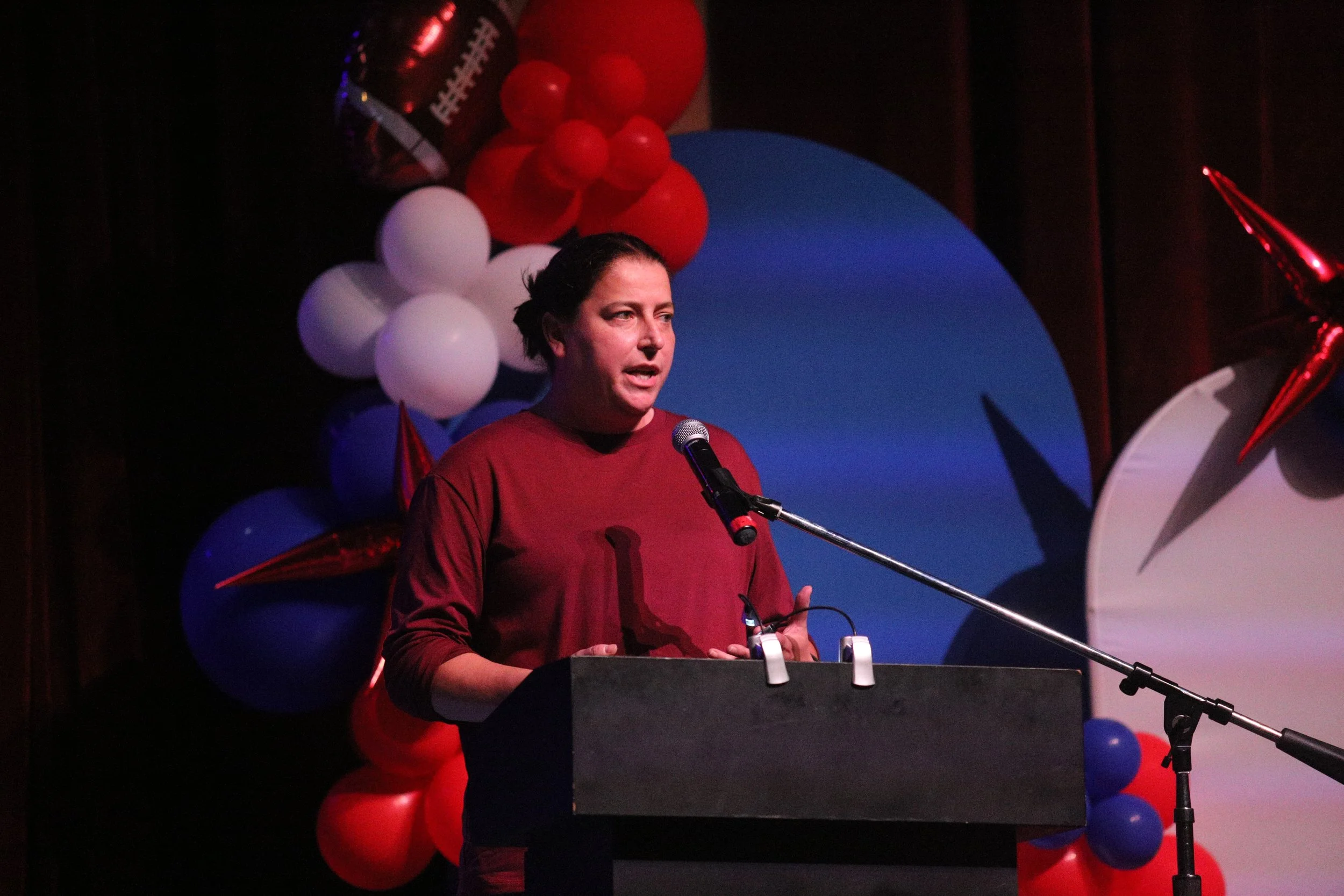
Jennifer Wilson
When Warren County hired Frank Wilson to lead the Pioneer basketball program in 1996, Betty Wood joked Saturday that someone in the school system must have known exactly what it was getting.
Not only did Warren County land its new coach, it also gained a future Hall of Fame player.
“I don’t know if whoever was doing the hiring knew that there was somebody waiting in the wings to play,” Wood said while introducing Jennifer Wilson into the Warren County Sports Hall of Fame.
Wilson had played her freshman season at Overton High School before moving to McMinnville with her family. Wood jokingly referred to her as Warren County’s “first and finest transfer,” adding that this was well before the days when NIL money could be part of the recruiting pitch.
What followed was a basketball career worthy of Saturday’s honor.
Wilson joined a Lady Pioneer program that also featured fellow 2026 inductee Jessica Grayson, and Wood credited the pair with helping change the culture surrounding Warren County girls basketball.
The Lady Pioneers produced a 20-win season and returned to postseason contention. Wilson earned all-district recognition during her high school career before taking her game to Trevecca Nazarene University, where another program experienced a similar transformation.
Wilson helped turn Trevecca into a contender, leading the program to four NAIA national tournament appearances. She became a four-time All-American, scored more than 2,000 career points and averaged 18.2 points per game during her college career.
She was later inducted into the Trevecca Athletic Hall of Fame.
Wood shared a description from Wilson’s college coach that summed up what she brought to the floor: “When Jennifer plays, she makes everybody on the team better.”
Wood believes that trait carried into the next phase of Wilson’s life as well.
Wilson has spent more than 20 years as an educator and coach, including a lengthy tenure at Mt. Juliet High School in several basketball and volleyball roles. Her coaching career, though, actually began back in Warren County when Jimmy Walker and Wood gave her an opportunity at Warren County Middle School.
Wood remembered Wilson coaching three girls teams during her lone year at WCMS and seeing qualities that would become trademarks throughout her career.
There were lessons to learn along the way, including a memorable game at Sparta where Wilson received two technical fouls and was ejected.
What Wood remembered most was Wilson’s response.
As the season progressed, Wood saw “a work ethic, high expectations and professionalism” in the young coach. Wilson credited those traits to her parents, Frank and Debbie.
Wood also noticed something happening with Wilson’s players.
“Her teams in middle school were always well-coached, and I can attest to the progress that each student made, game by game,” Wood said. “You don’t always see that in coaches, but her kids were getting better.”
That brought Wood back to the same point made about Wilson during her playing career.
She made people around her better.
Wilson’s acceptance speech focused much less on individual accomplishments and much more on the people who shared the journey with her.
“Looking back, my time playing basketball here wasn’t just about the wins or the stats,” Wilson said. “It was about the journey.”
She thanked her family for its sacrifices, her coaches for pushing her and her teammates for sharing everything that came with playing high school basketball.
“This honor belongs to all of us,” Wilson said. “Every practice, every battle and every bus ride on that short red, white and blue bus. It forged a bond that I will cherish forever.”
Wilson described arriving at Warren County for her final three high school seasons as stepping into the unknown.
The situation wasn't always perfect and preparation wasn't always conventional, but the players learned to depend on one another.
“Our collective commitment never wavered,” Wilson said. “When the lights came on and game time arrived, we trusted one another implicitly and we did whatever it took to win.”
Those seasons ultimately provided more than victories.
“The lessons forged during those years at Warren County were foundational in shaping the person that I am today,” Wilson said.
By the time she arrived at Trevecca, Wilson believed the successes, adversity and hardships she had experienced in McMinnville had prepared her for what was ahead.
The foundation had actually been built even earlier.
Wilson credited her parents with teaching her that relentless work combined with the right attitude could carry her wherever she wanted to go. Some of her most cherished memories came from countless hours spent in the Warren County High School gym working on her jump shot with her father.
“That was the best time of my life,” Wilson said.
The work paid off.
“That jump shot set the foundation for my success at the next level,” Wilson said.
Wilson closed by pointing to faith, family values and grit as the forces that have continued to guide her through basketball, coaching and education.
“I am honored by this recognition today,” Wilson said. “I am very humbled that I was thought of for this.”
Frank Wilson getting the Warren County job in 1996 turned out to be a pretty good hire on its own. As Wood noted Saturday, the bonus was that the Lady Pioneers got a future Hall of Famer in the deal.
Warren County Sports Hall of Fame members
Robert Turner, Clyde “Dixie” Roberts, Waymon Hillis, WC “Redd” Gaffin, Fred “Pop” Sain, “Babe” Wood, Tom Fann, Joe Nunley, Creed McClure, Allen McCormick, Everett Lee Mitchell, Katherine Smith, Hugh Milraney, Joe Parks, Virgil Denton, Charles “Steamboat” Cassidy, Franklin “Chick” Brown, Fred Phillips, Jimmy Earle, Paul Golden, Robert Phifer, Jack Martin, Dave Hoover, Kenneth Duke, John Cox, Sammy Elrod, Bobby Newby, Chester Womack, Sam Cordell, Joe Stewart, Cecil Prater, Francis Prater, Gene “Buzz” Smith, Troy Jones, Bob Mealor, Shirley Eaton Bost, Danny Martin, Douglas Hobbs, John Brock, JK Stanley, Ted Thaxton, Paul Matheny, Theodore Prater, Carolyn Cook Lance, Jamie “Cat” Walker, Jeff Womack, Lester Strode Jr., Leo Davis, Doug Milner, Edley Newman Jr., Allen Dalton, Patti Womack Clarke, Corker DeLoach Sr., Sam Boyd, Ann Jacobs Eades, Leslie & Wilma Henegar, Ronnie Brown, Marie Barnes Caldwell, Edd Cantrell Sr., Charlie Dalton, Marie Humphrey Davis, Bobby Haile, Pedro Paz, Barbara Biles, Mike Chilcutt, David Dunlap, Curtis Lusk, Harold Lusk, Jerry “Gooby” Martin, Keith Martin, Paige Northcutt, George Oleksik, Bill Rutledge, Russ Spivey, Jay Walker, Americans Baseball Program, Gary Cope, Lisa Dalton, Franklin Fisher, Scott Haile, Dennis Mix, Glen Powers, Betty Hardcastle Wood, Jessica Grayson, Charles “Slim” Ingalls, Greg King, Phillip King, Andy Link, Raymond Martin, Jimmy Walker and Jennifer Wilson.