

Two seasons into his tenure as Warren County High School's head football coach, Eric Belew has guided the Pioneers to 11 victories while working to establish a culture he believes can produce sustained success. After finishing 6-5 in 2025, Warren County closed the 2026 season at 5-6 following a heartbreaking 21-14 loss to LaVergne in the Nurserymen's Bowl.
With the season complete, The Warren County Way caught up with Belew for an extensive Q&A about the progress of his program, the evolution of the Pioneer offense, future scheduling, facilities and what it will take to build a competitive Class 6A football program.
Jeffery Simmons: Tony Vitello had a great line about how "we measure our own success." You finished 5-6 this year after going 6-5 last season. Are wins and losses the only measure of success: How do you and your staff measure success inside the locker room? What benchmarks tell you the program is moving forward, even when the scoreboard doesn't?
Coach Eric Belew: I measure our success by the content of our players character, first and foremost. Watching these young men buy into our four standards of being Selfless, Accountable, Loving, and Tough has truly been great to see.
Our attendance is up. Our discipline issues in the school building are way down. Our overall classroom performance is improving as well. We really feel like the essentials are put in place for our players to continue to succeed. That is all credited to them.
As far as the performance on the field, we can wonder what if all we want to about close games but ultimately we are not results-driven group. Whether we won by multiple scores or got beat by multiple scores, we are focused on improving daily. That mindset has to become part of our DNA more and more as this program turns.
JS: Offensively, Brady Swallows and Isaiah Robledo were record setters in the passing game in 2025. This year, AJ Whitman broke out with one of the top-five rushing seasons in school history. How do you continue to evolve an offense that's produced success in such different ways? How much is about adapting to your personnel versus building a consistent offensive identity?
EB: I've always been taught that your offense has to evolve around who you have. We don't try and put square pegs in round holes. AJ did a phenomenal job taking on the role of our lead back. He also did some really good things in the pass game as well. He bought into the mindset of being a physical presence at quarterback and we are thrilled to have him back next season. What really helped is we didn't change the structure of our offense although it did look drastically different from an outside perspective.
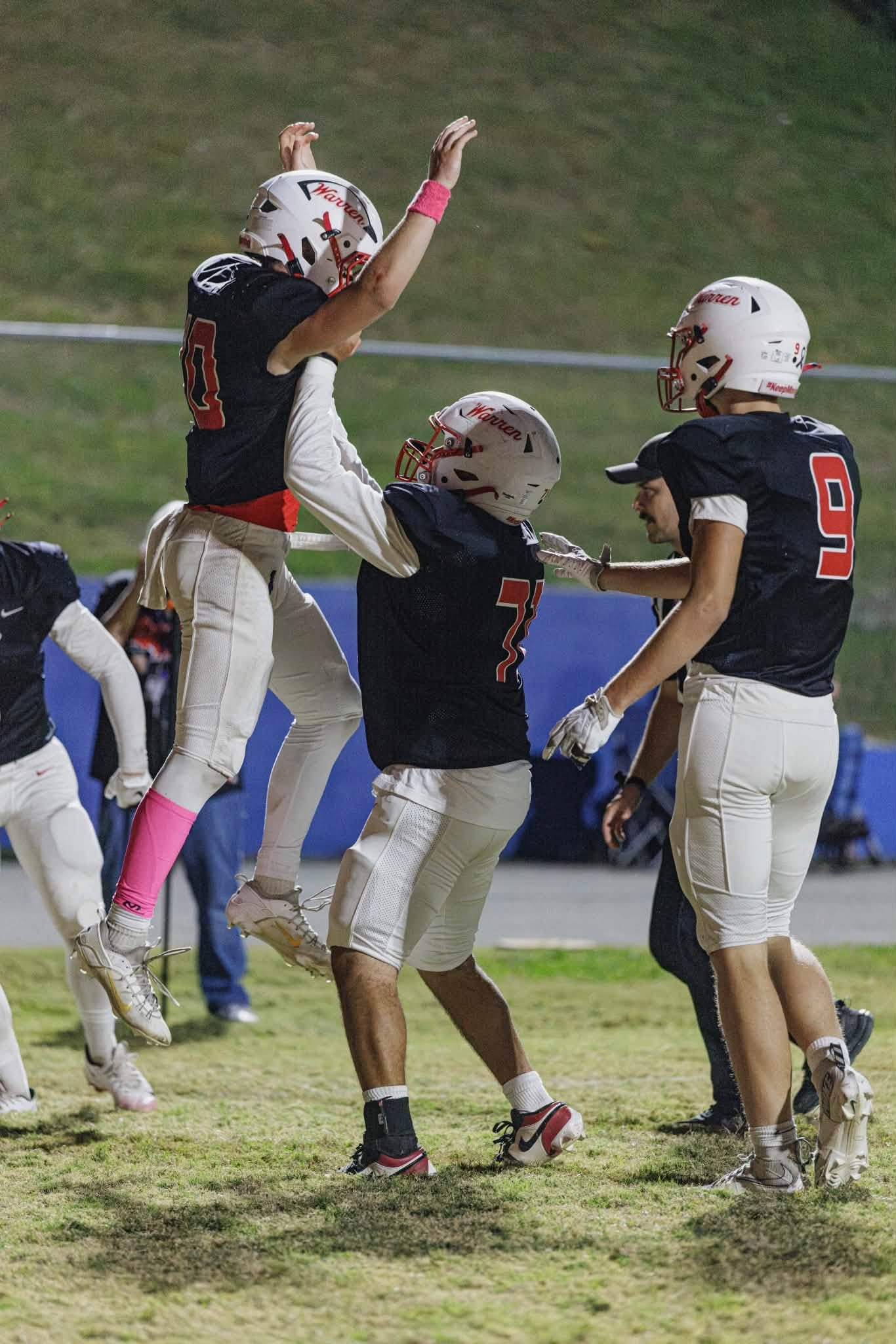
AJ Whitman’s 1,595 yards were fifth-most ever in a single season for WCHS, while his 17 scores ranked only behind Jeff Womack (34 - 1980) and CJ Taylor (23 - 2020) for a single campaign.
JS: There were some close losses this season, including DeKalb County in overtime, Livingston Academy and the late heartbreak against LaVergne. When you look at those games collectively, is there a common thread? What does this program have to improve to turn those kinds of games into wins?
EB: Our focus this offseason will be to win those games with our offseason training. We want to imagine those teams are in the weight room with us all summer. We need to make sure we are outworking those guys every day. It has to be a decision for each rep whether it's a bench press or taking a test that we are going to give it everything we have.
We don't want to focus on the past but it is an important reminder that with those close losses we don't have any opportunity for absences, skipping reps, or complacency.
JS: You’ve had two years to experience non-region scheduling, and now you have a much clearer picture of what works and what doesn't. What are going to be your benchmarks or measuring sticks when building future schedules? How do you balance finding winnable games with scheduling opponents that force your team to improve?
EB: What is most important is that we, as a team, are not focused on who we are playing and focused on what we are doing. The plan this offseason is to experience new teams - Experience teams that we don't have much of a history with, if at all.
We are planning on keeping Dekalb County Week 1 but the other 7-9 teams could be opponents that we have never played before. We need to be exposed to any and every kind of scheme. We need to play teams that are physical and teams that have speed. Ultimately, we want to create a schedule that allows us to focus on us but also exposes us to as many different types of football as we can find.

JS: How important are traditional border battles and nearby rivalries to Warren County football? Do games against neighboring programs give you a better measuring stick for where your team stands, and how much should those matchups influence the schedule over the next few years?
EB: I feel that our most "protected rivalry" is Dekalb County, so we will plan on playing them every year. I don't put a lot of stock in those types of games. I know I keep repeating myself but we are so concerned about who we are and our program that we don't focus a lot on games like that. It is just another opponent.
When you make games like that personal, it can really make an impact on the outcome. I would expect not playing many of those games this cycle and we will re-evaluate next cycle.
JS: The non-region schedule has allowed Warren County to rebuild confidence and establish some momentum. As you look toward eventually competing in a region again, how do you make sure the progress from these two seasons translates against the kind of competition you'll face every week?
EB: We have to make significant strides in our strength and conditioning. Administration hiring Sam Sanders as the schools full-time strength coach will be a massive advantage for us. He sees our deficits - He knows where we need to improve. His organization and planning for this offseason is already exciting to see.
We have to get bigger, faster, and stronger but we need to do it the right way. We need athletes that can accelerate and are powerful. Over the last two years we have set a solid foundation and now it is time turn that foundation into a team full of complete football players.
Also, we need to improve our numbers. We jumped about 15 players this year from 2025. We need to continue to grow at that rate for the next two years to have the numbers of a typical 6A program. That is our biggest difference. We don't have the depth that most 6A schools have.
We also need to get the athletes out of the hallways. We need to provide a product that kids want to be a part of. We can not afford size or speed to be walking the halls and not have a helmet on in the fall.
JS: When you look at Warren County football compared to programs you're trying to catch, where are the biggest gaps in resources? Whether it's facilities, equipment, staffing, offseason development or something else, what would make the biggest difference for your players and coaches?
EB: The biggest thing we need is space. Our numbers are growing. We have a good weight room and a good indoor facility. But if our numbers continue to grow - which we expect - we can not safely and effectively workout in our current weight room as a team.
It would be amazing for the plans for a new field house to come through. Our players wouldn't have to share lockers and we would have a functional and safe place to train all of our athletes at once. When you can train efficiently, it opens up more opportunities for our athletes to get home at a reasonable hour and spend time with their families and studies.
Also, it is no secret that I am a huge advocate for bringing in a new stadium.
The many reasons have been discussed. I just hope that the ones making the decisions truly evaluate how important it is for our players to have a stadium on campus. It is time. This does not have to be an athletics versus academics issue. You can say yes to one and also say yes to another. Having a stadium in our own campus allows us to do what we are paid to do, and that is serve the students in the best environment possible.
JS: You've talked about the culture established by your senior classes and your belief that participation numbers will continue to grow. What does the program need to do to turn that culture into greater roster depth, particularly along the offensive and defensive lines? How much of that work starts before players ever reach high school?
EB: I would say 95 percent of it starts before high school. It is significantly easier to win a kid over when they are 6-10 years old and they don't already have prior commitments and schedules. Our rec league, led by Tony Soloman, has done a phenomenal job of establishing a program.
We need more kids to come out - That is what is special about football. Very few, if any, programs have tryouts or cuts. If you want to play, you can play.
The ball will get rolling even more with those groups that have experience before middle school. It is already showing its benefits at the middle school with their success and we can't wait to get those kids with us that have almost a decade of football experience under their belt.
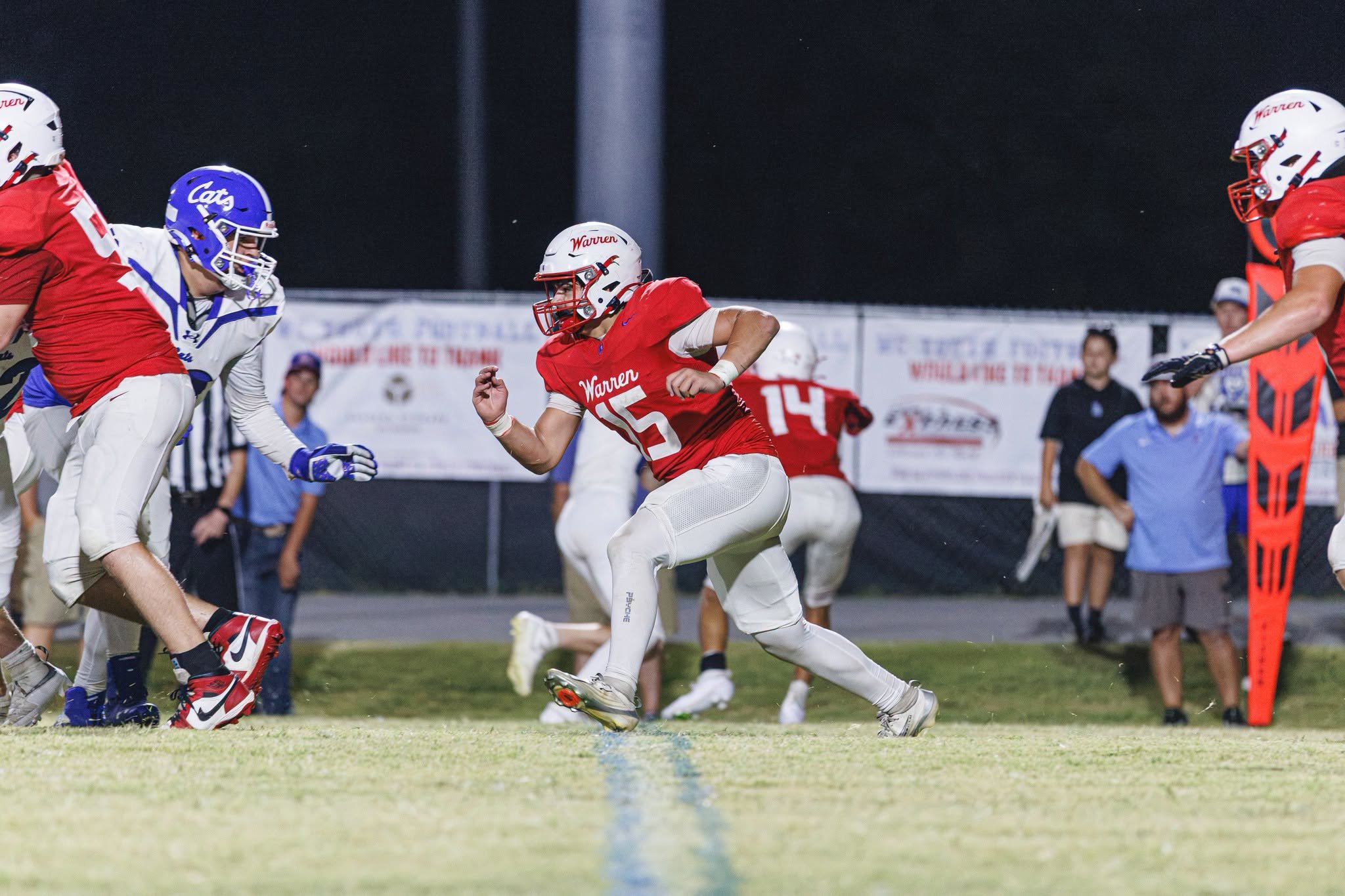
Sophomore Cam Redmore is a guy the Pioneer defense can build around after recording 112 tackles this season.
JS: With 15 seniors leaving, there are going to be opportunities for younger players to take on bigger roles. What excites you most about the talent returning, and what are the biggest questions you need answered between now and the start of the 2027 season?
EB: We are very excited about the amount of skill players we have coming back. We obviously are losing a lot of experience up front but you also have some lineman with a lot of experience as well. We rotated quite a bit. We just need to focus on getting better each day in the weight room and training and we will be able to fill those spots.
JS: Two years into being the head coach, what's something you believed when you took this job that you've since changed your mind about? Is there something you would handle completely differently today?
EB: I think the biggest uncertainty was how invested people I needed to be invested would be into the process. That is with any job you take. The people that need to be in our kids corner, certainly are and they show up every day. That uncertainty has been solidified. Our admin is willing to do what it takes for our program to be successful and so is our staff.
JS: What do you believe the realistic ceiling is for this program? And what changes would be needed for the base level to rise from the tough times the program has endured over decades?
EB: Establishing a ceiling is very difficult. I think what we are trying to do and how we are trying to accomplish it makes it a little uncertain. We are not, like a lot of schools, contacting other schools' players. I think a lot of teams think the fastest way to success is by poaching players to fill holes. Even where it is legal, at the college level, it has created so much instability. A fast rise often equals a fast fall.
We want to do have the mindset of improving each day with our guys. The relationships we create are important. That is our livelihood. If we do that, our ceiling can be an extremely competitive 6A football program that produces great young men.

JS: You have talked about building a culture that kids want to join. What does Warren County need from its community to help that happen? Are there things fans, businesses and local leadership could be doing that would make a tangible difference?
EB: I think the first thing is how you speak about our program. Are you speaking life into our kids? Or are you being a part of the problem?
Our kids don't need any more negativity in their lives than the common teenage life already provides. They are working hard and deserve your support. When any of our sports teams or organizations do a fundraiser, we ask that you help anyway you can. Even if you can't afford to contribute financially, share it on your socials or tell someone about who can contribute. Football ain't getting any cheaper and our players deserve the best.
JS: What's been the most rewarding moment of your first two seasons that most people outside the program probably don't know about? What’s something that made you feel like the work was paying off?
EB: When I see players living out the S.A.L.T. acronym, that is what is most rewarding. For example, when the player of the game shouts out the O-Line instead of talking about himself or seeing players celebrating for their teammates success - Those are the moments I love the most.
