
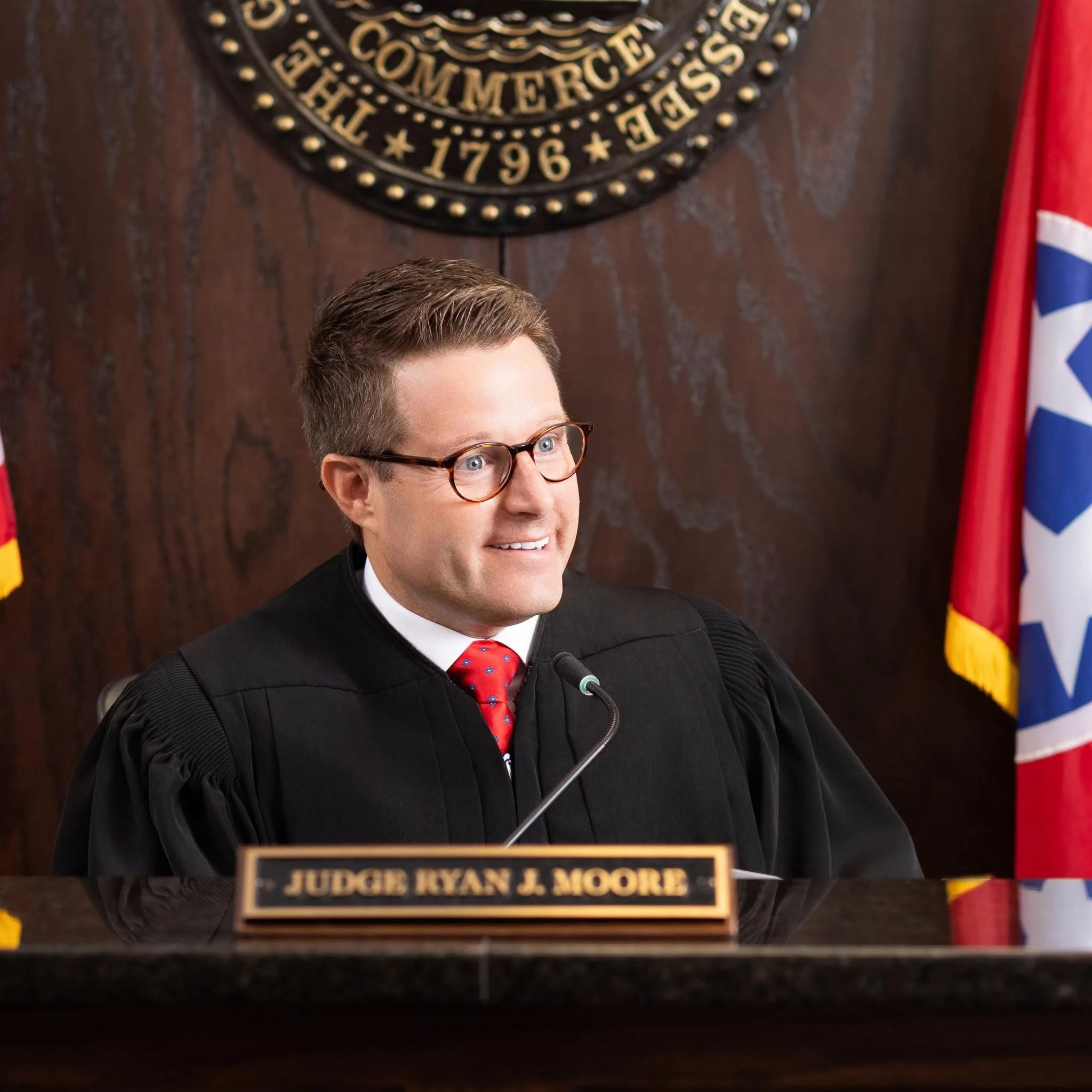
From the Judge Ryan J. Moore Facebook page
The first thing Judge Ryan J. Moore wanted to establish wasn't authority - It was tone.
A courtroom has to command respect. There are rules to follow, procedures to observe and decisions that can alter the course of someone's life. But from the first day he took the bench as Warren County General Sessions Judge in September 2022, Moore believed respect shouldn't flow in just one direction.
He expects it from the people who walk into his courtroom because he believes they deserve it from the bench as well.
"I want them to see that the court's going to be respectful to them. I want them to see that it's going to be a fair court. I want them to see that it's going to be an efficient court," Judge Moore said during a recent appearance on the Simmons Says show. "I don't want them to be afraid. It is the people's court."
Those aren't just words - they have become the foundation for the courtroom Moore has spent nearly four years shaping.
If you walk into General Sessions Court, there will be expectations: Dress appropriately, don't interrupt proceedings, don't use profane language and treat everyone in the courtroom with dignity.
Those rules apply equally, whether someone is standing before the judge on a speeding ticket or a much more serious charge.
Judge Moore learned quickly that establishing those expectations mattered.
On his very first day on the bench, an inmate appearing by video refused to identify himself before unloading a profanity-laced outburst directed at the new judge. Moore paused the proceedings, gave the man time to cool off and dealt with the matter later that afternoon.
It was an early reminder that every day behind the bench would require patience as much as authority.
General Sessions Court can move from routine traffic citations to life-changing criminal cases in a matter of minutes. To the people waiting for their names to be called, however, there is nothing routine about the moment.
“Every case up there - if you're the litigant - that’s the most important thing you're doing that day,” said Moore.
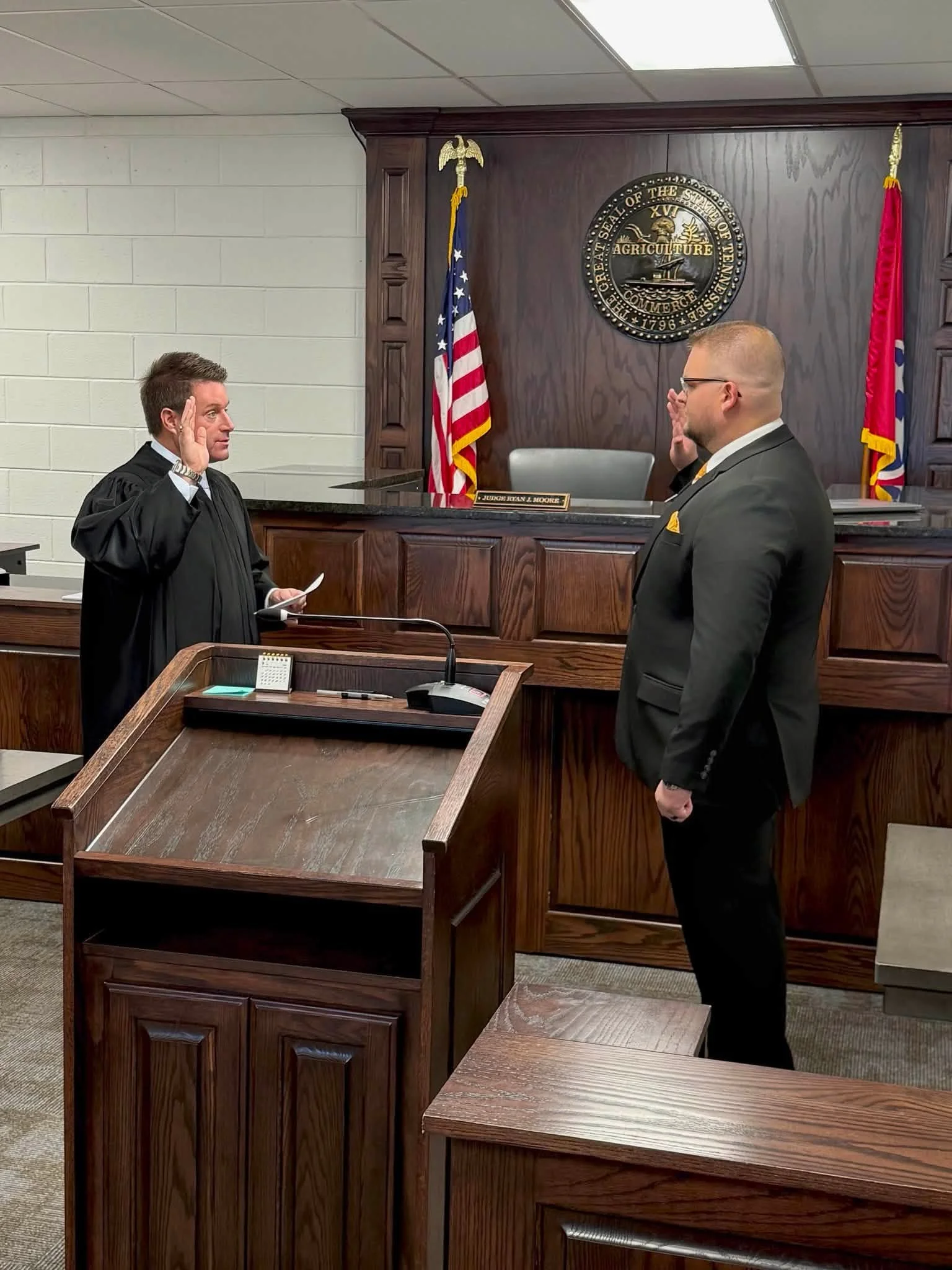
Photo from the Judge Ryan J. Moore Facebook page - Judge Moore swore in Warren County’s newest attorney, Justin Colwell, on July 1.
That perspective has shaped much of what has happened outside the courtroom as well.
Judge Moore doesn't talk much about punishment without also talking about opportunity.
Since taking office, he has helped expand programs aimed at keeping people from becoming repeat visitors to the courthouse.
Some focus on resolving disputes before they become drawn-out court battles. One of his favorite ways to explain mediation doesn't involve legal terms at all.
It involves a lemon.
"If you and I are fighting over a lemon, the judge may just slice that lemon in half," Moore said. "But if we get to mediation, we might determine that you need the zest of the lemon and I need the juice of the lemon. We can craft an agreement where we both win. That's the beauty of mediation."
For Moore, those moments represent a different kind of success. Rather than forcing a winner and loser, mediation allows neighbors, landlords and tenants, or families to leave the courthouse with solutions tailored to what each side actually needs.
The courtroom may settle disputes, but the hope is that mediation helps end them.
Other programs Judge Moore has helped push center on recovery, accountability and giving people struggling with addiction another path forward. His support of CASA and Warren County's new Safe Baby Court reflects another goal entirely - helping children and families find stability before another generation grows up inside the court system.
While the programs are different, the philosophy behind them is remarkably consistent. Success isn't measured by how many cases come through the courtroom - it’s measured by how many never have to return.
That philosophy extends to probation as well.
Moore makes no apology for holding people accountable when they violate the conditions they've agreed to follow. If someone has been given another chance, he expects them to treat it like one.
At the same time, he admits some of the most rewarding moments of his career come from watching people who once stood before him rebuild their lives.
"I've taken a chance on a lot of litigants," Moore said. "As many times as those have let me down, the ones that don't, that's what matters. That's the inspiration that keeps me going."
Perhaps no object captures that philosophy better than a small painted rock sitting quietly inside Moore's chambers.
It wasn't created by a local artist looking for recognition - it was painted by a child who entered the court system under heartbreaking circumstances and barely spoke English. A CASA volunteer recognized his artistic ability, found him painting supplies and encouraged him to create. When he finished, he gave the rock to the court.
Moore has kept it ever since.
To anyone else, it might look like a simple decoration resting on a shelf. To the judge who sees thousands of cases every year, it's something else entirely: A reminder that behind every docket number is a person, behind every hearing is a family and behind every decision is the hope that someday, someone who once needed the courtroom won't ever need to walk through its doors again.
